
Invasive Ductal Carcinoma
🩺 Invasive Ductal Carcinoma (IDC)
Published by – Stree Welfare Foundation
🌐 https://swfindia.org/
Invasive Ductal Carcinoma (IDC) is the most frequently diagnosed form of breast cancer, responsible for approximately 70–80% of cases worldwide. It starts in the milk ducts and gradually spreads to nearby breast tissues if not identified at an early stage. Although it primarily affects women, men can also develop this condition in rare instances.
In its early phase, IDC often does not present noticeable symptoms. As it progresses, warning signs may include a lump in the breast, changes in breast size or shape, nipple discharge, or skin changes such as dimpling. Regular screening methods like mammograms play a crucial role in early detection and improving survival rates.
While the exact cause remains unclear, several factors can increase the risk, including genetic mutations, hormonal imbalances, obesity, smoking, and alcohol consumption.
Treatment varies depending on the stage and may involve surgery, chemotherapy, radiation therapy, or targeted treatments. Early diagnosis greatly enhances the chances of successful treatment.
Stree Welfare Foundation actively promotes breast cancer awareness and encourages women to undergo regular health checkups for timely detection and prevention.
👉 Visit: https://swfindia.org/ for more information.
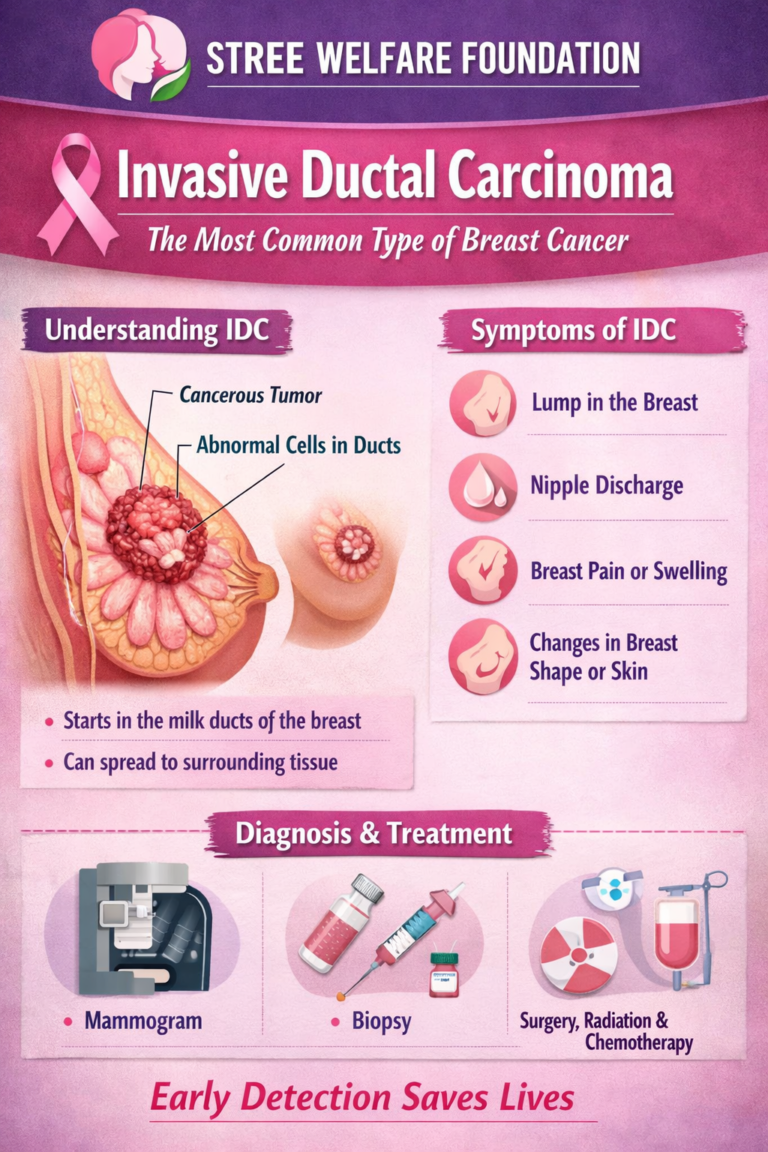
Invasive Ductal Carcinoma (IDC): Symptoms, Causes, Diagnosis, Treatment & Prevention
Introduction
Breast cancer is one of the most common cancers affecting women worldwide, and among its various types, Invasive Ductal Carcinoma (IDC) is the most frequently diagnosed. It accounts for nearly 70–80% of all breast cancer cases, making it a critical topic for awareness, early detection, and prevention.
At Stree Welfare Foundation, our mission is to spread awareness about serious health conditions like breast cancer and empower women with the right knowledge for early diagnosis and treatment.
In this detailed guide, we will explain everything you need to know about Invasive Ductal Carcinoma (IDC), including its symptoms, causes, risk factors, diagnosis, treatment options, and prevention strategies.
What is Invasive Ductal Carcinoma (IDC)?
Invasive Ductal Carcinoma (IDC) is a type of breast cancer that begins in the milk ducts of the breast and then spreads (invades) the surrounding breast tissues. If not treated in time, it can also spread to other parts of the body through the lymphatic system or bloodstream.
👉 “Invasive” means the cancer has spread beyond the ducts, and “ductal” refers to the milk ducts where the cancer starts.
IDC can affect both women and men, but it is far more common in women.
Key Facts About IDC
Most common type of breast cancer
Accounts for 70–80% of all breast cancer cases
Can occur at any age, but risk increases with age
Early detection significantly improves survival rates
Symptoms of Invasive Ductal Carcinoma
In the early stages, IDC may not cause noticeable symptoms. However, as the tumor grows, the following signs may appear:
🔸 Common Symptoms:
A lump in the breast or underarm
Change in breast size or shape
Skin dimpling or puckering
Nipple discharge (sometimes bloody)
Inverted nipple
Redness or thickening of breast skin
Persistent breast pain
👉 If you notice any of these symptoms, consult a doctor immediately.
Causes of Invasive Ductal Carcinoma
The exact cause of IDC is not always known, but it begins when breast cells develop mutations in their DNA, causing them to grow uncontrollably.
🔬 Main Causes:
Genetic mutations (BRCA1 & BRCA2 genes)
Hormonal imbalance
Lifestyle factors
Environmental exposure
Risk Factors of IDC
Certain factors can increase the risk of developing Invasive Ductal Carcinoma:
🔹 Major Risk Factors:
Increasing age
Family history of breast cancer
Early menstruation or late menopause
Obesity
Alcohol consumption
Smoking
Hormone replacement therapy
Lack of physical activity
👉 Understanding these risk factors helps in prevention and early screening.
Diagnosis of Invasive Ductal Carcinoma
Early diagnosis plays a crucial role in successful treatment. Doctors use several tests to detect IDC:
Common Diagnostic Methods:
1. Mammogram
An X-ray of the breast used to detect lumps or abnormalities.
2. Ultrasound
Helps determine whether a lump is solid or fluid-filled.
3. Biopsy
A small sample of tissue is removed and tested for cancer cells.
4. MRI Scan
Provides detailed images of breast tissues.
Stages of Invasive Ductal Carcinoma
IDC is classified into stages based on how far the cancer has spread:
Stage 0: Non-invasive (localized)
Stage I–II: Early-stage invasive cancer
Stage III: Locally advanced cancer
Stage IV: Cancer has spread to other organs (metastatic)
👉 Early-stage detection leads to better treatment outcomes.
Treatment Options for IDC
Treatment depends on the stage, size of the tumor, and overall health of the patient.
Common Treatment Methods:
🔹 Surgery
Lumpectomy (removal of tumor)
Mastectomy (removal of breast)
🔹 Radiation Therapy
Destroys cancer cells using high-energy rays.
🔹 Chemotherapy
Uses drugs to kill cancer cells.
🔹 Hormone Therapy
Blocks hormones that fuel cancer growth.
🔹 Targeted Therapy
Targets specific cancer cells without harming normal cells.
Prevention of Invasive Ductal Carcinoma
While not all cases can be prevented, certain lifestyle changes can reduce the risk:
✅ Prevention Tips:
Maintain a healthy weight
Exercise regularly
Avoid smoking and alcohol
Eat a balanced diet
Go for regular breast screenings
Perform self-breast examinations
👉 Early detection is the best prevention.
Importance of Breast Cancer Awareness
In India, many women are still unaware of breast cancer symptoms, leading to late diagnosis. Awareness campaigns, education, and screening programs are essential to save lives.
Stree Welfare Foundation actively works to:
Spread awareness about breast cancer
Organize health camps
Promote early screening
Support women’s health initiatives
When to See a Doctor?
Consult a doctor immediately if you notice:
Any lump in the breast
Changes in breast appearance
Unusual discharge
Persistent pain
👉 Early consultation can save lives.
Living with IDC: Support & Care
Being diagnosed with IDC can be emotionally challenging. Support from family, doctors, and organizations plays a vital role.
Tips for Patients:
Stay informed about your condition
Follow doctor’s advice strictly
Join support groups
Maintain a positive mindset
🏁 Conclusion
Invasive Ductal Carcinoma (IDC) is a serious but treatable form of breast cancer, especially when detected early. With proper awareness, regular screening, and a healthy lifestyle, the risk can be reduced, and many lives can be saved.
At Stree Welfare Foundation, we are committed to educating women and promoting early detection of diseases like breast cancer. Awareness is the first step toward prevention and a healthier society.
Updated By – Stree Welfare Foundation
This article is regularly updated by Stree Welfare Foundation to provide accurate and up-to-date information about breast cancer, awareness, and prevention.
👉 For more information, visit:
🌐 https://swfindia.org/