
Head and Neck Cancer
Head and Neck Cancer: Symptoms, Causes & Awareness
Published by: Stree Welfare Foundation
🌐 https://swfindia.org/
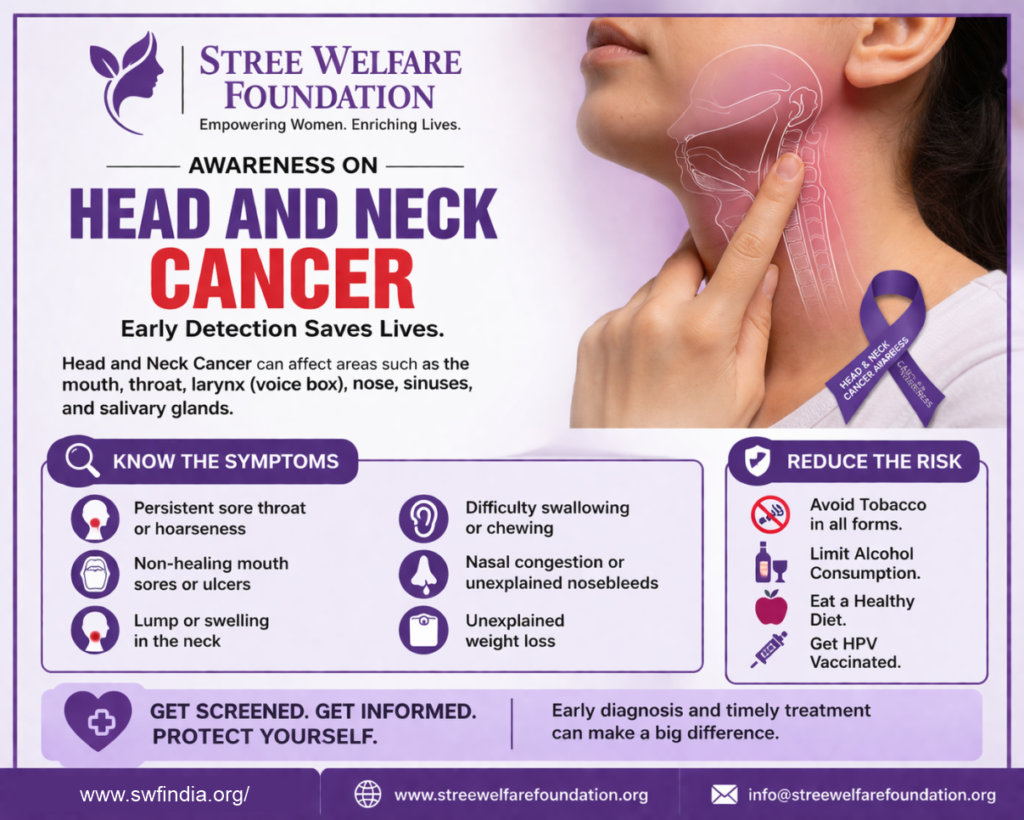
Head and Neck Cancer refers to a group of cancers that develop in the mouth, throat, nose, sinuses, and salivary glands. These cancers usually begin in the squamous cells lining these areas. In recent years, cases have increased due to unhealthy lifestyle habits and infections.
The major causes include tobacco use, smoking, chewing gutkha, excessive alcohol consumption, Human Papillomavirus (HPV) infection, poor oral hygiene, and exposure to harmful chemicals. These risk factors greatly increase the chances of developing cancer in the head and neck region.
Common symptoms include persistent sore throat, difficulty swallowing, voice changes, non-healing mouth ulcers, swelling in the neck, and unexplained weight loss. If these symptoms last for more than two weeks, medical advice should be taken immediately.
Early detection is very important for successful treatment. Doctors use physical examinations, biopsies, and imaging tests such as CT and MRI scans to diagnose the condition. Treatment options include surgery, radiation therapy, chemotherapy, or a combination of these methods.
Prevention is possible by avoiding tobacco and alcohol, maintaining good oral hygiene, eating a healthy diet, and undergoing regular health checkups.
Stree Welfare Foundation is dedicated to spreading awareness about cancer prevention and promoting early diagnosis to save lives.
Head and Neck Cancer: Symptoms, Causes, Diagnosis, Treatment & Prevention
🧠 Introduction: Understanding Head and Neck Cancer
Head and Neck Cancer is a group of cancers that develop in the tissues and organs of the head and neck region, including the mouth, throat, nose, sinuses, and salivary glands. Most of these cancers begin in the squamous cells that line the moist surfaces inside these areas.
These cancers are becoming increasingly common worldwide, particularly among individuals exposed to tobacco, alcohol, and certain viral infections like HPV (Human Papillomavirus). While men are traditionally at higher risk, cases among women are also rising due to lifestyle and environmental factors.
The most important fact is that early detection can significantly improve survival rates. This is why awareness, education, and regular screening play a crucial role in saving lives. Stree Welfare Foundation is actively committed to spreading health awareness and educating communities about cancer prevention.
📌 Types of Head and Neck Cancer
Head and Neck Cancer is not a single disease but a collection of different cancer types depending on the area affected:
1. Oral Cancer (Mouth Cancer)
Oral cancer affects the lips, tongue, gums, inner cheeks, and roof or floor of the mouth.
It is strongly associated with tobacco chewing and smoking.
2. Pharyngeal Cancer (Throat Cancer)
This cancer develops in the pharynx (throat region), which is responsible for swallowing and breathing. It may affect voice and eating ability.
3. Laryngeal Cancer (Voice Box Cancer)
Laryngeal cancer occurs in the larynx, commonly known as the voice box. One of the earliest symptoms is persistent hoarseness or voice change.
4. Nasal Cavity and Sinus Cancer
This type of cancer develops inside the nasal passages or sinuses. It is rare but can be aggressive if not detected early.
5. Salivary Gland Cancer
Salivary gland cancer affects glands that produce saliva. It often appears as swelling near the jaw, neck, or ears.
⚠️ Major Causes and Risk Factors
Head and neck cancers develop due to multiple risk factors, often linked to lifestyle and environmental exposure:
🚬 Tobacco Consumption
Smoking cigarettes, cigars, or using chewing tobacco is the leading cause of head and neck cancers.
🍺 Alcohol Use
Excessive alcohol intake significantly increases the risk, especially when combined with tobacco use.
🦠 HPV Infection
Human Papillomavirus (HPV), especially high-risk strains like HPV-16, is strongly linked with throat and oral cancers.
☀️ Sun Exposure
Prolonged exposure to ultraviolet rays can increase the risk of lip cancer.
🧬 Genetic Predisposition
A family history of cancer may increase the likelihood of developing head and neck cancers.
🏭 Occupational Hazards
Exposure to harmful chemicals, asbestos, dust, and industrial fumes can also contribute to risk.
🔍 Symptoms of Head and Neck Cancer
The symptoms may vary depending on the exact location of the cancer. However, common warning signs include:
Persistent sore throat that does not heal
Difficulty swallowing or pain while swallowing
Hoarseness or voice changes lasting more than two weeks
Non-healing ulcers in the mouth
Lump or swelling in the neck or jaw area
Sudden unexplained weight loss
Ear pain without infection
Bleeding from the mouth or nose
👉 If any of these symptoms persist for more than 2–3 weeks, it is essential to consult a doctor immediately.
🏥 Diagnosis of Head and Neck Cancer
Early and accurate diagnosis is essential for successful treatment. Doctors use several methods to confirm the presence of cancer:
🧪 Physical Examination
A detailed examination of the mouth, throat, and neck is performed to detect visible abnormalities.
🔬 Biopsy
A small tissue sample is collected and tested in a laboratory to confirm cancer cells.
🖥️ Imaging Tests
Advanced imaging techniques help determine the size and spread of cancer:
CT Scan
MRI Scan
PET Scan
👃 Endoscopy
A thin, flexible tube is inserted to view internal areas of the throat and nasal passages.
Early diagnosis plays a major role in improving treatment success and survival rates.
💉 Treatment Options for Head and Neck Cancer
Treatment depends on the type, location, and stage of cancer. Common treatment methods include:
🔪 Surgery
Surgical removal of the tumor is often the first treatment option. In advanced cases, reconstructive surgery may be required.
⚡ Radiation Therapy
High-energy radiation is used to destroy cancer cells and shrink tumors. It is commonly used after surgery.
💊 Chemotherapy
Chemotherapy uses drugs to kill cancer cells or stop their growth. It is often combined with radiation therapy.
🎯 Targeted Therapy
This treatment focuses on specific molecules involved in cancer growth, reducing damage to healthy cells.
🧬 Immunotherapy
Immunotherapy strengthens the body’s immune system to fight cancer more effectively and is considered an advanced treatment option.
🛡️ Prevention of Head and Neck Cancer
While not all cancers can be prevented, the risk can be significantly reduced by adopting healthy habits:
🚭 Avoid Tobacco Completely
Quitting smoking and tobacco use is the most effective preventive step.
🍷 Limit Alcohol Intake
Reducing or avoiding alcohol significantly lowers cancer risk.
💉 HPV Vaccination
HPV vaccines help protect against infections linked to throat and oral cancers.
🥗 Healthy Diet
A diet rich in fruits, vegetables, and antioxidants strengthens immunity.
🧼 Maintain Oral Hygiene
Regular dental checkups and proper oral care help prevent infections.
🧑⚕️ Regular Health Screening
Early screening increases the chances of detecting cancer at a treatable stage.
📊 Importance of Early Detection
Early detection of head and neck cancer can dramatically improve survival rates. In early stages, treatment is less aggressive, less costly, and more effective.
Unfortunately, due to lack of awareness, many cases are diagnosed at advanced stages. This highlights the urgent need for public education and awareness programs.
❤️ Role of Stree Welfare Foundation in Cancer Awareness
Stree Welfare Foundation is dedicated to spreading awareness about serious health issues such as cancer. The organization focuses on educating communities about:
Early warning signs of cancer
Importance of regular health checkups
Preventive healthcare practices
Awareness in rural and urban populations
🌐 Visit: https://swfindia.org/
Through blogs, health campaigns, and community outreach programs, the foundation aims to create a healthier and more informed society.
🧾 Conclusion
Head and Neck Cancer is a serious but largely preventable disease. With proper awareness, lifestyle changes, and timely medical attention, its impact can be significantly reduced.
Avoiding tobacco and alcohol, maintaining good oral hygiene, and undergoing regular screenings are key steps toward prevention.
Most importantly, awareness saves lives. Organizations like Stree Welfare Foundation continue to play a vital role in educating people and promoting early diagnosis.
Together, we can build a healthier and more aware society.