
Jaw Cancer
Jaw Cancer: Symptoms, Causes and Prevention
Published by – Stree Welfare Foundation
👉 https://swfindia.org/
Jaw cancer is a serious condition that affects the bones and tissues of the jaw. It is often linked to oral diseases and can impact daily activities such as speaking, chewing, and swallowing. Early detection is very important, as timely treatment can significantly improve recovery chances.
The main causes include tobacco use, excessive alcohol consumption, poor oral hygiene, and infections such as HPV. People who smoke or chew tobacco are at a higher risk of developing this condition, making awareness and lifestyle changes essential.
Common symptoms include persistent jaw pain, swelling, loose teeth, difficulty in chewing, numbness in the face, and sores in the mouth that do not heal. If these symptoms continue for more than two weeks, it is important to consult a doctor immediately for proper diagnosis.
Prevention plays a key role in reducing the risk of this disease. Avoiding tobacco and alcohol, maintaining good oral hygiene, and having regular dental checkups can help in early detection and prevention of Jaw Cancer.
The Stree Welfare Foundation works actively to spread awareness and encourage people to adopt healthy habits for a better and disease-free life.
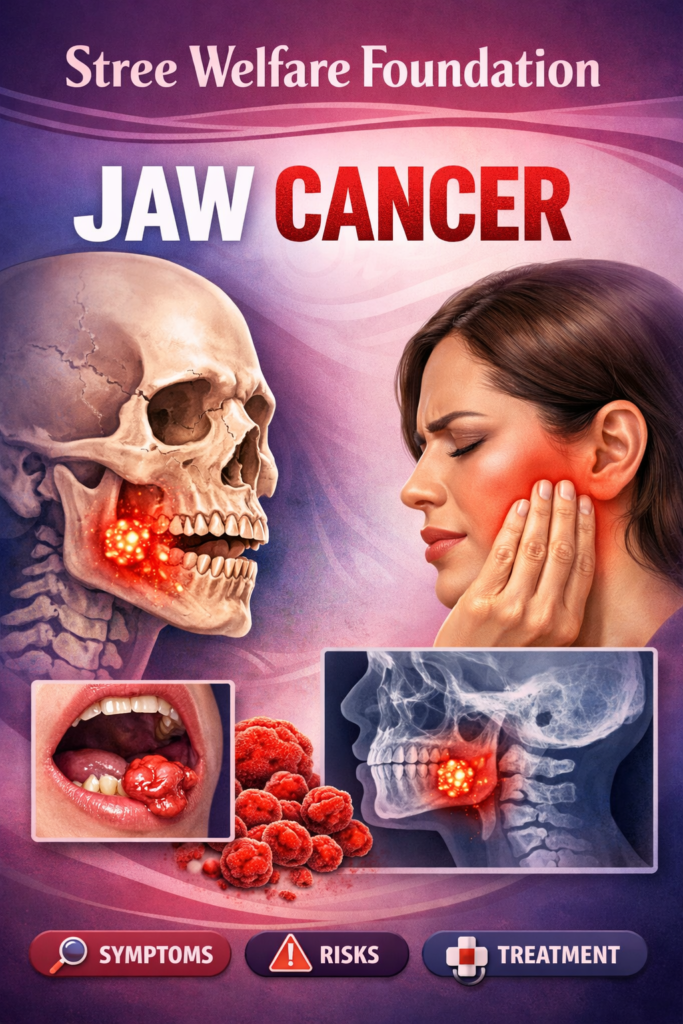
Jaw Cancer: Symptoms, Causes, Prevention & Treatment
Introduction
Jaw cancer is a serious and often overlooked form of cancer that affects the bones and tissues of the jaw. It can significantly impact a person’s ability to speak, chew, and maintain overall oral health. Despite its severity, awareness about jaw cancer remains low, especially in developing countries like India.
The Stree Welfare Foundation is committed to spreading awareness about life-threatening diseases like cancer and encouraging early diagnosis and prevention. This article provides a complete guide on jaw cancer, including its causes, symptoms, diagnosis, treatment options, and preventive measures.
What is Jaw Cancer?
Jaw cancer refers to the abnormal growth of malignant cells in the jawbone or surrounding tissues. It is often associated with oral cancer and may develop in the lower jaw (mandible) or upper jaw (maxilla).
This type of cancer can originate in the bone itself or spread from nearby areas such as the mouth, gums, or throat. If not diagnosed early, jaw cancer can spread to other parts of the body, making treatment more complex.
Types of Jaw Cancer
Jaw cancer can be classified into different types depending on its origin and nature:
1. Primary Jaw Cancer
This type originates directly in the jawbone. It is relatively rare.
2. Secondary Jaw Cancer
This occurs when cancer spreads (metastasizes) from other parts of the body to the jaw.
3. Oral Squamous Cell Carcinoma
The most common type associated with jaw cancer, usually affecting the lining of the mouth and spreading to the jaw.
4. Osteosarcoma
A type of bone cancer that can affect the jaw, especially in younger individuals.
5. Ameloblastoma (Aggressive Tumor)
Although often benign, it can be aggressive and damage the jaw structure.
Causes of Jaw Cancer
The exact cause of jaw cancer is not always clear, but several risk factors contribute to its development:
Tobacco use (smoking and chewing)
Excessive alcohol consumption
Poor oral hygiene
Human Papillomavirus (HPV) infection
Genetic factors
Exposure to radiation
Chronic irritation in the mouth
Among these, tobacco and alcohol are the leading causes in many cases, particularly in India.
Risk Factors
Certain individuals are at higher risk of developing jaw cancer:
People who use tobacco products regularly
Individuals who consume alcohol excessively
Those with a history of oral cancer
People with weakened immune systems
Individuals with poor dental and oral hygiene
Older adults, especially above 40 years
Understanding these risk factors is essential for prevention and early detection.
Symptoms of Jaw Cancer
Jaw cancer symptoms may vary depending on the stage and severity of the disease. Early symptoms are often mild and easily ignored.
Common Symptoms Include:
Persistent jaw pain
Swelling or lump in the jaw
Difficulty in chewing or swallowing
Loose teeth without dental cause
Numbness in the jaw or face
Sores in the mouth that do not heal
Changes in facial shape
Bleeding in the mouth
If any of these symptoms persist for more than two weeks, medical consultation is highly recommended.
Diagnosis of Jaw Cancer
Early diagnosis plays a crucial role in successful treatment. Doctors may recommend several tests:
1. Physical Examination
A thorough examination of the mouth and jaw area.
2. Imaging Tests
X-rays
CT scan
MRI
These tests help in identifying the size and location of the tumor.
3. Biopsy
A small sample of tissue is taken and examined under a microscope to confirm cancer.
4. Blood Tests
Used to assess overall health and detect abnormalities.
Stages of Jaw Cancer
Jaw cancer is categorized into stages based on its spread:
Stage 1: Small tumor confined to one area
Stage 2: Tumor has grown but not spread
Stage 3: Cancer spreads to nearby tissues or lymph nodes
Stage 4: Advanced stage with spread to distant organs
Early-stage cancer has a much higher chance of successful treatment.
Treatment Options for Jaw Cancer
The treatment depends on the stage, location, and overall health of the patient.
1. Surgery
Removal of the tumor and affected tissues. In severe cases, part of the jawbone may need to be removed.
2. Radiation Therapy
High-energy rays are used to destroy cancer cells.
3. Chemotherapy
Drugs are used to kill cancer cells or stop their growth.
4. Targeted Therapy
Focuses on specific cancer cells with fewer side effects.
5. Reconstructive Surgery
Helps restore the appearance and function of the jaw after tumor removal.
A combination of treatments is often used for better results.
Prevention of Jaw Cancer
While not all cases can be prevented, certain lifestyle changes can significantly reduce the risk:
Avoid tobacco in all forms
Limit alcohol consumption
Maintain good oral hygiene
Eat a balanced and nutritious diet
Get regular dental checkups
Avoid HPV infection through safe practices
Seek early treatment for oral issues
Prevention is always better than cure, especially in cancer cases.
Importance of Early Detection
Early detection can save lives. When diagnosed at an early stage, jaw cancer is more treatable and has a higher survival rate.
Regular health checkups, dental visits, and awareness of symptoms are key factors in early diagnosis.
Role of Awareness and NGOs
Lack of awareness is one of the biggest challenges in fighting cancer in India. Many cases are diagnosed at advanced stages due to ignorance or fear.
The Stree Welfare Foundation plays a vital role in spreading awareness about cancer, especially among women and rural communities. Through health campaigns, awareness programs, and community outreach, the foundation aims to educate people about early symptoms and preventive measures.
Living with Jaw Cancer
A diagnosis of jaw cancer can be emotionally and physically challenging. Patients may experience difficulty in eating, speaking, and maintaining social interactions.
Support from family, proper medical care, and counseling can significantly improve quality of life. Rehabilitation programs and nutritional support also play an important role in recovery.
Conclusion
Jaw cancer is a serious but preventable and treatable disease when detected early. Awareness, timely diagnosis, and proper medical care are essential in reducing its impact.
Every individual should prioritize oral health and seek medical advice if any unusual symptoms appear. By adopting a healthy lifestyle and avoiding risk factors like tobacco and alcohol, the chances of developing jaw cancer can be significantly reduced.
The Stree Welfare Foundation remains committed to promoting health awareness and empowering individuals with the knowledge needed to fight diseases like cancer. Together, we can build a healthier and more informed society.
Updated By – Stree Welfare Foundation
This article is regularly updated by Stree Welfare Foundation to ensure accurate and up-to-date information about jaw cancer, prevention, and treatment. Our mission is to spread awareness and encourage early diagnosis to save lives.
For more information and awareness programs, visit:
👉 https://swfindia.org/