
Skin Cancer
Skin Cancer: Symptoms, Causes & Prevention
Published By – Stree Welfare Foundation
🌐 Website: https://swfindia.org/
Skin cancer is one of the most common types of cancer and occurs when skin cells grow abnormally, often due to excessive exposure to harmful ultraviolet (UV) rays from the sun. With increasing sun exposure and lifestyle changes, awareness about skin cancer has become more important than ever.
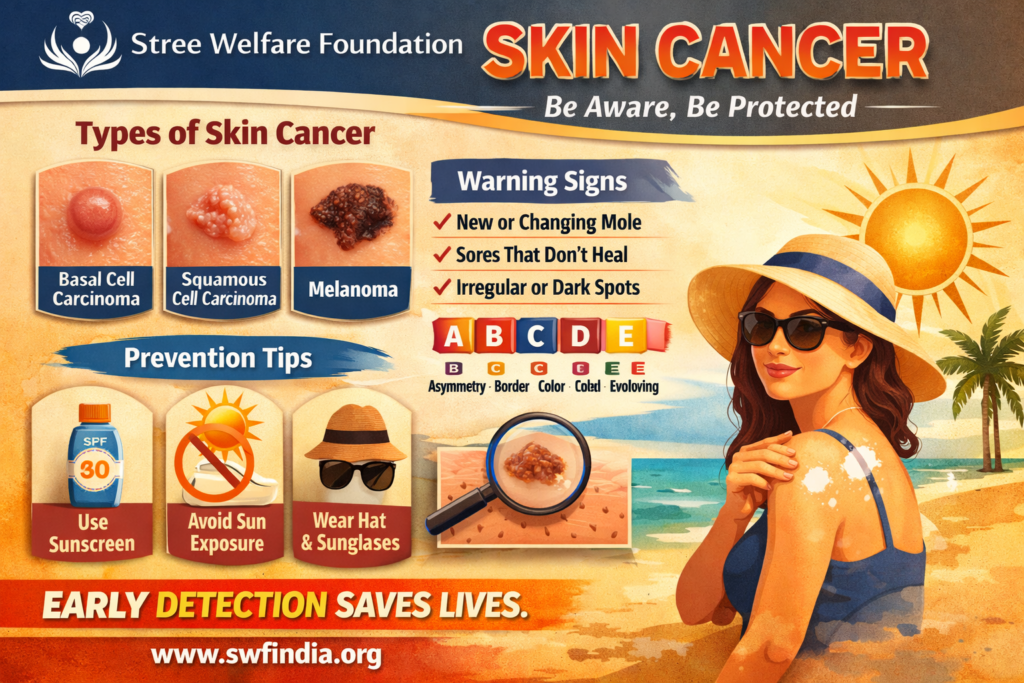
There are three main types of skin cancer: Basal Cell Carcinoma, Squamous Cell Carcinoma, and Melanoma. Among these, melanoma is the most dangerous as it can spread quickly if not treated early.
Common warning signs include a new mole, changes in an existing mole, uneven skin color, sores that do not heal, or itching and bleeding on the skin. Following the ABCDE rule (Asymmetry, Border, Color, Diameter, Evolving) can help identify early signs.
The best way to prevent skin cancer is to protect your skin. Avoid direct sunlight during peak hours, use sunscreen with SPF 30 or higher, wear protective clothing, and regularly check your skin for any unusual changes.
Early detection can save lives. If you notice anything unusual, consult a doctor immediately.
“Stay aware, stay protected.”
Skin Cancer: Symptoms, Causes, Prevention & Treatment – A Complete Guide
Introduction: What is Skin Cancer?
Skin cancer is one of the most common cancers seen across the world today. It develops when the skin cells start growing in an unusual and uncontrolled way. In most cases, this happens because of too much exposure to the sun’s harmful ultraviolet (UV) rays, which damage the DNA of skin cells over time.
With changing lifestyles, increasing pollution, and prolonged sun exposure, the number of skin cancer cases is rising every year. This makes it important for everyone to understand the condition, recognize early warning signs, and take preventive steps.
In this blog, we will explain skin cancer in a simple and practical way — covering its types, symptoms, causes, risk factors, prevention, and treatment options.
Types of Skin Cancer
Skin cancer is mainly divided into three common types. Each type behaves differently and requires different levels of care.
1. Basal Cell Carcinoma (BCC)
This is the most common form of skin cancer. It usually appears as a small, shiny bump or a slightly raised patch on the skin.
The good news is that BCC grows slowly and rarely spreads to other parts of the body. However, if ignored, it can damage nearby skin and tissues.
2. Squamous Cell Carcinoma (SCC)
This type is slightly more serious than BCC. It often shows up as red, rough, or scaly patches on the skin, and sometimes as open sores.
If not treated on time, SCC can spread to other parts of the body. Early diagnosis is very important in this case.
3. Melanoma (Most Dangerous Type)
Melanoma is less common but much more aggressive. It usually develops from existing moles or appears as a new dark spot on the skin.
This type of cancer can spread quickly to other organs if not detected early, which is why awareness and regular skin checks are extremely important.
Early Signs and Symptoms of Skin Cancer
One of the best ways to fight skin cancer is to detect it early. Your skin often gives warning signs — you just need to pay attention.
Some common symptoms include:
A new mole or growth on the skin
Changes in size, shape, or color of an existing mole
A sore that does not heal
Itching, bleeding, or crusting on the skin
Red or rough patches
A simple way to check suspicious moles is by following the ABCDE rule:
A – Asymmetry: One half looks different from the other
B – Border: Edges are irregular or uneven
C – Color: Different shades in one spot
D – Diameter: Larger than 6 mm
E – Evolving: Any change over time
If you notice any of these signs, it is better to consult a doctor without delay.
Causes of Skin Cancer
The main cause of skin cancer is excessive exposure to ultraviolet (UV) radiation, which comes from the sun and artificial sources like tanning beds.
UV rays damage the DNA in skin cells. When this damage builds up over time, it can lead to uncontrolled cell growth, which results in cancer.
Other contributing factors include:
Genetic changes in the body
Contact with harmful chemicals
Weak immune system
Previous radiation exposure
Risk Factors of Skin Cancer
Some people have a higher risk of developing skin cancer due to certain conditions or habits.
Common risk factors include:
Spending long hours in the sun without protection
Having a history of sunburns
Family history of cancer
Increasing age
Working outdoors regularly
It is important to remember that skin cancer can affect anyone — regardless of skin color or age. Awareness is key for everyone.
Why Skin Cancer Awareness is Important
Skin cancer is one of the most preventable types of cancer, yet many people ignore early symptoms. Millions of cases are diagnosed every year, but when detected early, the chances of successful treatment are very high.
Spreading awareness can help people take action early and reduce serious health complications.
Diagnosis of Skin Cancer
If a doctor suspects skin cancer, they may recommend a few simple tests:
Physical Examination: Checking the skin for unusual changes
Dermoscopy: A closer look at the skin using a special device
Biopsy: Removing a small piece of skin to test in a lab
These methods help confirm whether cancer is present and determine its type.
Treatment Options for Skin Cancer
Treatment depends on how advanced the cancer is and which type it is.
Surgery
This is the most common treatment. The doctor removes the affected skin area to stop the spread.
Radiation Therapy
Used when surgery is not possible or when cancer needs additional treatment.
Chemotherapy
Recommended in advanced cases where cancer has spread.
Immunotherapy & Targeted Therapy
These modern treatments help the body’s immune system fight cancer more effectively.
With medical advancements, treatment success rates have improved significantly, especially when cancer is detected early.
Prevention Tips for Skin Cancer
Preventing skin cancer is easier than treating it. Simple daily habits can make a big difference.
Protect Yourself from Sun
Try to avoid direct sunlight during peak hours (10 AM to 4 PM). Wear hats, sunglasses, and full-sleeve clothing when outdoors.
Use Sunscreen Regularly
Apply sunscreen with SPF 30 or higher before stepping out. Reapply it every few hours if you stay outside.
Avoid Artificial Tanning
Tanning beds can be just as harmful as sunlight.
Check Your Skin Regularly
Keep an eye on any new or changing spots. Early detection can save your life.
Skin Cancer in India: Growing Concern
In India, people often overlook skin health, assuming that darker skin provides complete protection. However, this is a myth. Skin cancer can affect anyone.
Due to increasing exposure to sunlight, pollution, and lack of awareness, cases are slowly rising. This is why spreading correct information is very important.
Organizations like Stree Welfare Foundation are actively working to raise awareness, promote early detection, and encourage healthy living practices in society.
When Should You See a Doctor?
You should consult a doctor if you notice:
A mole that suddenly changes
A wound that doesn’t heal
Any unusual growth on the skin
Ignoring these signs can delay treatment and make the condition worse.
Conclusion
Skin cancer is a serious health condition, but the good news is that it is largely preventable and treatable if detected early.
By protecting your skin, staying aware of warning signs, and seeking timely medical advice, you can reduce your risk significantly.
Awareness is the first step toward prevention. Share this information with your family and friends — it might help save a life.