
Non-Small Cell Lung Cancer
Non-Small Cell Lung Cancer (NSCLC)
Published by – Stree Welfare Foundation
Website – https://swfindia.org/
Non-Small Cell Lung Cancer (NSCLC) is the most common type of lung cancer, accounting for nearly 85% of all cases worldwide. It is a serious disease that develops in the tissues of the lungs and can spread to other parts of the body if not diagnosed and treated early. NSCLC is generally slower in growth compared to small cell lung cancer, but it still requires immediate medical attention.
The major causes of NSCLC include smoking, exposure to secondhand smoke, air pollution, and contact with harmful chemicals such as asbestos and radon gas. Genetic factors can also increase the risk. Common symptoms include persistent cough, chest pain, difficulty in breathing, fatigue, unexplained weight loss, and coughing up blood.
Early diagnosis plays a crucial role in successful treatment. Doctors use imaging tests like CT scans, PET scans, and biopsies to confirm the disease. Treatment options include surgery, chemotherapy, radiation therapy, targeted therapy, and immunotherapy, depending on the stage of cancer.
Preventing NSCLC mainly involves avoiding tobacco, reducing exposure to pollution, and maintaining a healthy lifestyle. Regular health checkups can help in early detection and improve survival chances.
Raising awareness about NSCLC is important to reduce its impact and encourage timely medical care.
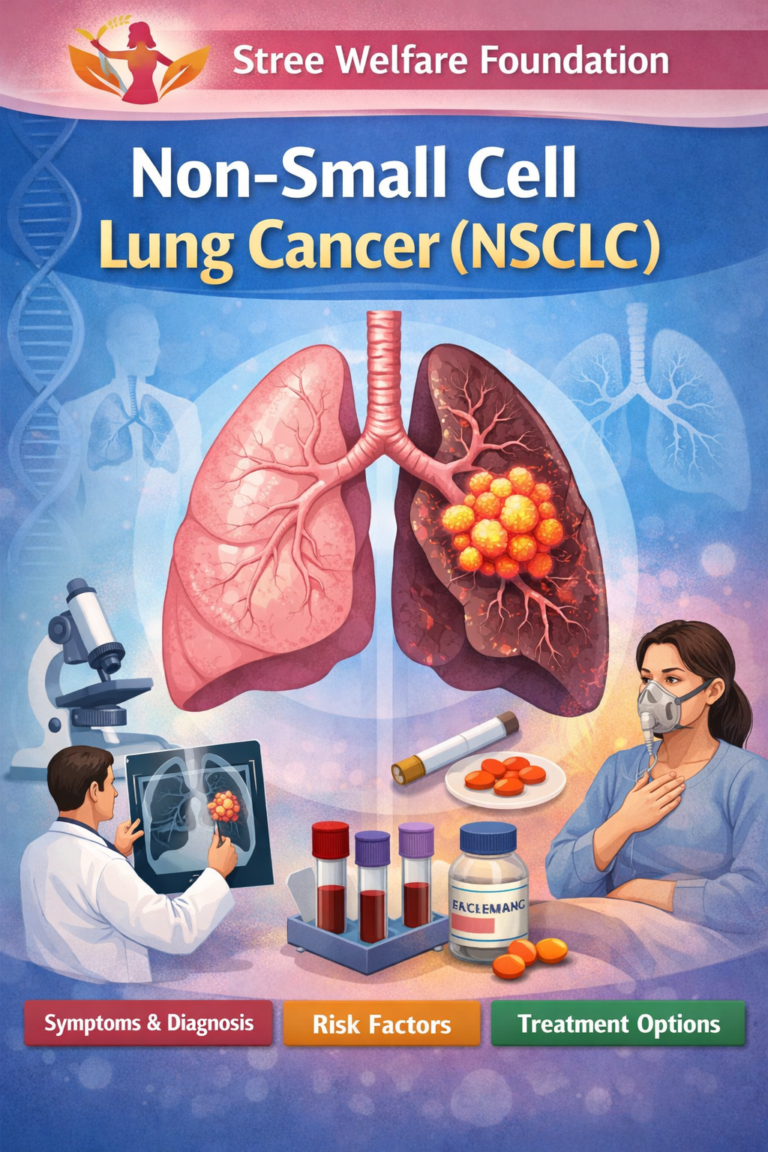
Non-Small Cell Lung Cancer (NSCLC): Complete Guide on Causes, Symptoms, Diagnosis, Treatment & Prevention
Introduction
Non-Small Cell Lung Cancer (NSCLC) is one of the most prevalent types of lung cancer globally, accounting for approximately 85% of all lung cancer cases. Due to its high occurrence rate, it remains a major public health concern worldwide. Although medical advancements have improved treatment outcomes, awareness and early detection continue to play a critical role in increasing survival rates.
At Stree Welfare Foundation, our mission is to raise awareness about serious health conditions like NSCLC, encouraging individuals to recognize early warning signs and adopt preventive healthcare measures.
This detailed guide provides in-depth information about NSCLC, including its types, causes, symptoms, stages, diagnosis, treatment methods, and prevention strategies.
What is Non-Small Cell Lung Cancer (NSCLC)?
Non-Small Cell Lung Cancer (NSCLC) refers to a group of lung cancers that differ from small cell lung cancer in terms of growth patterns and treatment response. Generally, NSCLC grows at a slower pace, but it can still become life-threatening if not identified and treated in time.
Main Types of NSCLC
NSCLC is categorized into three primary types:
1. Adenocarcinoma
The most common form of lung cancer
Frequently diagnosed in non-smokers
Typically develops in the outer regions of the lungs
2. Squamous Cell Carcinoma
Strongly associated with smoking habits
Usually originates in the central airways of the lungs
3. Large Cell Carcinoma
Less common but highly aggressive
Can develop in any part of the lung
Causes of NSCLC
Identifying the causes of NSCLC is essential for reducing risk and ensuring early intervention.
1. Tobacco Smoking
Smoking remains the leading cause of NSCLC. Harmful chemicals in tobacco smoke damage lung tissues over time, leading to cancer development.
2. Exposure to Secondhand Smoke
Individuals who do not smoke but are regularly exposed to cigarette smoke are also at significant risk.
3. Air Pollution
Long-term exposure to polluted air, especially in urban areas, can increase the likelihood of lung cancer.
4. Occupational Hazards
Certain work environments expose individuals to dangerous substances such as:
Asbestos
Radon gas
Diesel fumes
These can significantly elevate the risk of NSCLC.
5. Genetic Predisposition
A family history of lung cancer may increase an individual’s susceptibility.
Symptoms of NSCLC
In its early stages, NSCLC often does not produce noticeable symptoms. However, as the condition progresses, the following symptoms may appear:
Persistent or worsening cough
Chest discomfort or pain
Difficulty breathing
Coughing up blood
Constant fatigue
Sudden and unexplained weight loss
Voice changes or hoarseness
If these symptoms persist, seeking medical advice promptly is essential.
Staging of NSCLC
The stage of NSCLC indicates how far the cancer has spread in the body:
Stage 1
Cancer is confined to the lungs and has not spread beyond.
Stage 2
Cancer has spread to nearby lymph nodes.
Stage 3
Cancer has extended within the chest region.
Stage 4
Cancer has metastasized to distant organs such as the brain, liver, or bones.
Early diagnosis significantly enhances the chances of successful treatment.
Diagnosis of NSCLC
Diagnosing NSCLC requires a combination of medical tests and procedures:
1. Imaging Techniques
Chest X-ray
CT (Computed Tomography) Scan
PET (Positron Emission Tomography) Scan
2. Biopsy
A tissue sample from the lung is examined to confirm the presence of cancer.
3. Molecular Testing
This test identifies specific genetic mutations, helping doctors choose targeted treatments.
4. Bronchoscopy
A flexible tube is used to examine the airways and detect abnormalities.
Treatment Options for NSCLC
The choice of treatment depends on the stage of cancer, its type, and the patient’s overall health condition.
1. Surgical Treatment
Most effective in early stages
Involves removal of the tumor and affected tissue
2. Radiation Therapy
Uses high-energy radiation to destroy cancer cells
Often used when surgery is not feasible
3. Chemotherapy
Involves drugs that kill or slow the growth of cancer cells
May be used before or after surgery
4. Targeted Therapy
Focuses on specific cancer-causing genetic mutations
Offers more precise treatment with fewer side effects
5. Immunotherapy
Enhances the body’s immune system to fight cancer cells
Risk Factors of NSCLC
Several factors can increase the risk of developing NSCLC:
Smoking or history of smoking
Exposure to harmful chemicals and pollutants
Chronic respiratory diseases
Increasing age (especially above 50 years)
Weakened immune system
Prevention of NSCLC
Although NSCLC cannot always be prevented, certain lifestyle changes can significantly reduce the risk:
1. Stop Smoking
Quitting smoking is the most effective way to lower the risk of lung cancer.
2. Avoid Secondhand Smoke
Limit exposure to environments where smoking is prevalent.
3. Minimize Pollution Exposure
Use protective measures like masks and maintain indoor air quality.
4. Maintain a Healthy Lifestyle
Eat a balanced and nutritious diet
Exercise regularly
Get sufficient rest
5. Routine Health Screenings
Regular medical checkups help in early detection and timely treatment.
Importance of Early Detection
Early detection is one of the most important factors in improving survival outcomes. Screening methods such as low-dose CT scans are particularly beneficial for high-risk individuals, including long-term smokers.
Detecting NSCLC at an early stage allows for more effective treatment and better recovery chances.
Living with NSCLC
A diagnosis of NSCLC can be challenging both physically and emotionally. However, proper management and support can greatly improve the quality of life.
Helpful Tips for Patients
Adhere strictly to medical treatment plans
Follow a healthy and balanced diet
Seek emotional and psychological support
Stay active as advised by healthcare professionals
Role of Awareness and Social Initiatives
Non-Small Cell Lung Cancer – Organizations like Stree Welfare Foundation play an essential role in raising awareness about life-threatening diseases such as lung cancer. Through education, community outreach, and support programs, such initiatives contribute significantly to early detection and better patient care.
To learn more about health awareness programs and initiatives, visit:
https://swfindia.org/
Conclusion
Non-Small Cell Lung Cancer (NSCLC) is a serious yet manageable condition when detected early. Increased awareness, timely diagnosis, and access to modern treatment options can greatly improve patient outcomes.
Adopting a healthy lifestyle, avoiding risk factors like smoking, and undergoing regular health checkups are key preventive measures.
Stree Welfare Foundation remains dedicated to spreading awareness and empowering individuals with the knowledge needed to combat diseases like NSCLC, helping build a healthier future for all.
Frequently Asked Questions (FAQs)
Q1. Can NSCLC be cured?
Yes, NSCLC can be effectively treated and even cured if diagnosed in its early stages.
Q2. Who is most at risk of NSCLC?
People who smoke, are exposed to pollution, or have a family history of lung cancer are at higher risk.
Q3. What affects the survival rate of NSCLC?
The stage at which the cancer is diagnosed plays a major role in determining survival rates.
Q4. Is it possible for non-smokers to develop NSCLC?
Yes, non-smokers can develop NSCLC due to environmental exposure or genetic factors.
Published by: Stree Welfare Foundation
Website: https://swfindia.org/