
Renal Cell Carcinoma
Renal Cell Carcinoma: Types and Clear Cell RCC Overview
Published By – Stree Welfare Foundation
🌐 https://swfindia.org/
Renal Cell Carcinoma (RCC), commonly known as kidney cancer, is the most common type of cancer affecting the kidneys. It begins in the lining of the renal tubules and often develops silently without early symptoms. Many cases are detected incidentally during imaging tests like ultrasound or CT scans.
There are several types of RCC, among which clear cell renal cell carcinoma (ccRCC) is the most common, accounting for nearly 75–85% of cases. This type is named after the clear appearance of cancer cells under a microscope and is known to be more aggressive than other forms. Other types include papillary RCC and chromophobe RCC, which are comparatively less common.
Common symptoms of RCC may include blood in urine, persistent back pain, fatigue, and unexplained weight loss. Risk factors such as smoking, obesity, and high blood pressure increase the chances of developing this cancer.
Early detection plays a crucial role in successful treatment. Surgical removal of the tumor is the primary treatment, along with targeted therapy and immunotherapy in advanced cases. Awareness and regular health checkups can significantly improve outcomes and save lives.
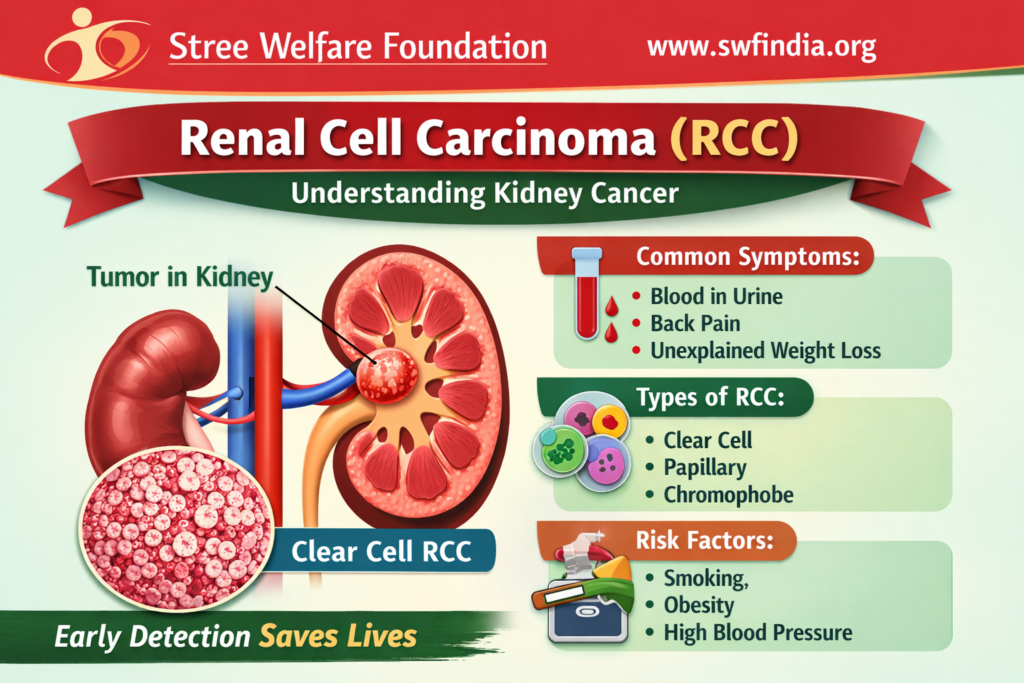
Renal Cell Carcinoma (Kidney Cancer): Types, Clear Cell RCC & Complete Guide
Introduction
Renal Cell Carcinoma (RCC), commonly known as kidney cancer, is one of the most common cancers affecting the kidneys. It begins in the lining of tiny tubes (renal tubules) inside the kidney that filter blood and remove waste. Renal Cell Carcinoma accounts for nearly 85% of all kidney cancer cases, making it the most dominant form of this disease worldwide. (Cleveland Clinic)
With increasing awareness and early diagnosis, many RCC cases can now be treated successfully. However, understanding its types—especially clear cell renal cell carcinoma—is essential for prevention, early detection, and treatment planning.
What is Renal Cell Carcinoma?
Renal Cell Carcinoma is a cancer that originates in the renal tubules, which play a crucial role in filtering blood and producing urine. This cancer usually starts as a small tumor in one kidney but can grow and spread to other parts of the body if not treated in time.
Globally, hundreds of thousands of new RCC cases are diagnosed each year, making it a significant public health concern. (PubMed)
Key Facts:
Most common type of kidney cancer
Often detected incidentally during imaging tests
More common in men and older adults
Early-stage RCC may not show symptoms
Symptoms of Renal Cell Carcinoma
In early stages, RCC often shows no noticeable symptoms, which makes regular health checkups important. As the disease progresses, symptoms may include:
Blood in urine (hematuria)
Persistent pain in the side or lower back
Lump in the abdomen
Fatigue and weight loss
Fever not caused by infection
Because symptoms appear late, many cases are discovered accidentally during CT scans or ultrasounds. (Cleveland Clinic)
Types of Renal Cell Carcinoma
Renal Cell Carcinoma is not a single disease but a group of cancers classified based on how tumor cells look under a microscope. There are several types, but the most important ones include:
1. Clear Cell Renal Cell Carcinoma (ccRCC)
Clear Cell Renal Cell Carcinoma
This is the most common type, accounting for approximately 75–85% of RCC cases. (MedicineNet)
Features:
Named for its “clear” appearance under a microscope
Highly vascular (rich blood supply)
More aggressive compared to some other types
Can spread to lungs, bones, and liver
Prognosis:
The survival rate varies depending on the stage, but early detection significantly improves outcomes. (Healthline)
2. Papillary Renal Cell Carcinoma
Papillary Renal Cell Carcinoma
Accounts for 10–15% of RCC cases
Characterized by finger-like projections (papillae)
Generally has a better prognosis than clear cell RCC
3. Chromophobe Renal Cell Carcinoma
Chromophobe Renal Cell Carcinoma
Makes up about 5–10% of cases
Cells appear pale but larger
Usually less aggressive than clear cell RCC
4. Unclassified & Rare Types
Some RCC tumors do not fit into standard categories and are grouped as unclassified RCC. These are relatively rare but may require specialized treatment.
Why Clear Cell RCC is the Most Important
Among all types, clear cell renal cell carcinoma is the most researched and clinically significant because:
It represents the majority of kidney cancer cases
It tends to grow faster and spread more aggressively
It has distinct genetic mutations (like VHL gene changes) (PubMed)
Most targeted therapies and immunotherapies are designed for this subtype
Causes and Risk Factors
While the exact cause of RCC is not always known, several risk factors increase the likelihood of developing this cancer:
Major Risk Factors:
Smoking
Obesity
High blood pressure
Family history of kidney cancer
Genetic conditions
Long-term dialysis
Environmental and lifestyle factors also play a significant role in increasing cancer risk.
Diagnosis of Renal Cell Carcinoma
Early diagnosis is crucial for better survival outcomes. Doctors use the following methods:
Common Diagnostic Tests:
Ultrasound
CT scan or MRI
Blood and urine tests
Biopsy (in some cases)
Most RCC cases are detected incidentally during imaging tests, which improves early detection rates. (Cleveland Clinic)
Stages of Renal Cell Carcinoma
RCC is classified into stages based on tumor size and spread:
Stage I – Tumor confined to kidney
Stage II – Larger tumor but still localized
Stage III – Spread to nearby tissues or lymph nodes
Stage IV – Metastatic (spread to distant organs)
Early-stage RCC has a significantly better prognosis compared to advanced stages.
Treatment Options
Treatment depends on the type, stage, and overall health of the patient.
1. Surgery (Primary Treatment)
Partial nephrectomy (removing part of kidney)
Radical nephrectomy (removing entire kidney)
2. Targeted Therapy
Drugs that target cancer cell growth pathways
3. Immunotherapy
Boosts the immune system to fight cancer
4. Ablation Therapy
Cryoablation (freezing cancer cells)
Radiofrequency ablation (heating cancer cells)
5. Radiation Therapy
Used in advanced or metastatic cases
Chemotherapy is generally less effective for RCC, unlike other cancers.
Prevention Tips
While RCC cannot always be prevented, the risk can be reduced by:
Avoiding smoking
Maintaining a healthy weight
Managing blood pressure
Staying physically active
Regular health checkups
Importance of Awareness
Kidney cancer often develops silently. Awareness about symptoms and risk factors can help in:
Early diagnosis
Better treatment outcomes
Reduced mortality rates
Organizations like Stree Welfare Foundation play a crucial role in spreading awareness, especially among women and underserved communities.
Conclusion
Renal Cell Carcinoma is a serious but treatable cancer when detected early. Among its types, clear cell renal cell carcinoma is the most common and clinically significant, making it a key focus for research and treatment.
Understanding the different types of RCC, recognizing early symptoms, and adopting a healthy lifestyle can make a significant difference in outcomes. With continued awareness and medical advancements, survival rates for kidney cancer are steadily improving.
About Stree Welfare Foundation
Stree Welfare Foundation is dedicated to promoting health awareness, women empowerment, and social welfare across India.
🌐 Visit: https://swfindia.org/
Their mission is to educate communities about critical health issues like cancer and encourage early diagnosis and preventive care.