
Papillary Thyroid Cancer
Papillary Thyroid Cancer: A Brief Overview
Published by – Stree Welfare Foundation
Website – https://swfindia.org/
Papillary Thyroid Cancer (PTC) is the most common type of thyroid cancer, affecting the thyroid gland located in the neck. It develops in the follicular cells responsible for producing thyroid hormones that regulate metabolism. This cancer is generally slow-growing and highly treatable, especially when detected early.
The exact cause of Papillary Thyroid Cancer is not always known, but risk factors include exposure to radiation, genetic mutations, and a family history of thyroid disorders. It is more commonly seen in women than men. In many cases, patients may not experience symptoms initially. However, as the condition progresses, signs such as a lump in the neck, difficulty swallowing, hoarseness, or swollen lymph nodes may appear.
Diagnosis typically involves ultrasound imaging and a fine needle aspiration biopsy. Treatment often includes surgery to remove part or all of the thyroid gland, followed by radioactive iodine therapy if necessary. Patients may also require lifelong thyroid hormone medication.
With early detection and proper treatment, the survival rate for Papillary Thyroid Cancer is very high. Raising awareness through organizations like Stree Welfare Foundation plays a vital role in encouraging early diagnosis and better health outcomes.
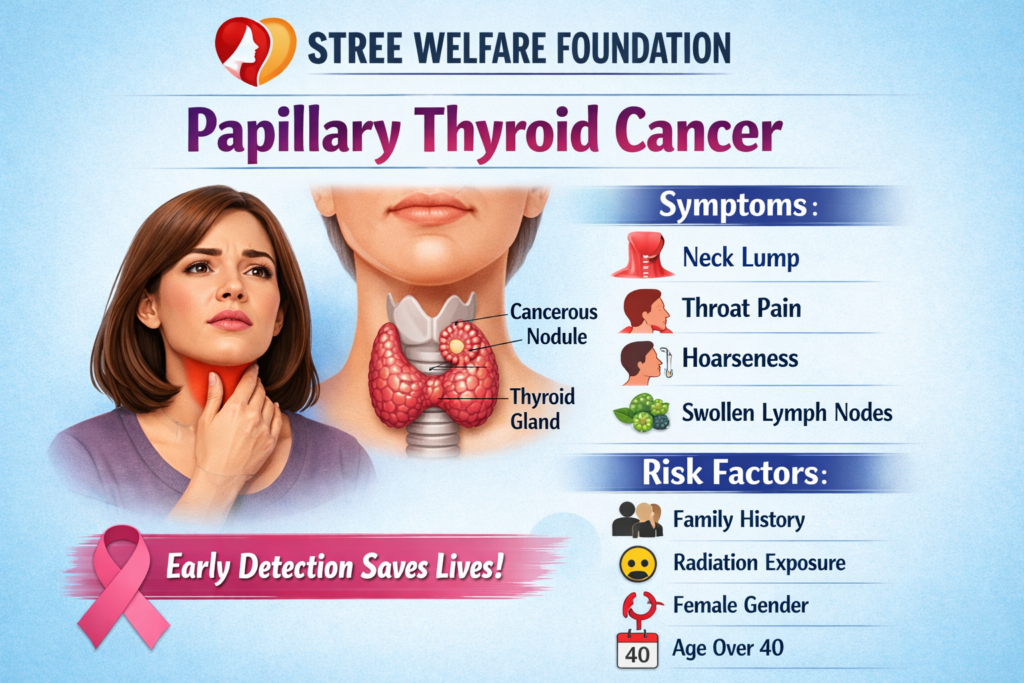
Papillary Thyroid Cancer: Causes, Symptoms, Diagnosis, Treatment, and Prevention
Introduction
Papillary Thyroid Cancer (PTC) is the most common type of thyroid cancer, accounting for approximately 80–85% of all thyroid cancer cases worldwide. It originates in the follicular cells of the thyroid gland, which are responsible for producing and storing thyroid hormones. Although the word “cancer” often creates fear, papillary thyroid cancer is generally slow-growing and highly treatable, especially when detected early.
This comprehensive guide aims to provide detailed, SEO-optimized, and easy-to-understand information about Papillary Thyroid Cancer, including its causes, symptoms, risk factors, diagnosis, treatment options, and preventive strategies. Awareness is crucial for early detection and better outcomes.
What is Papillary Thyroid Cancer?
Papillary Thyroid Cancer is a type of differentiated thyroid cancer that develops in the thyroid gland located at the base of the neck. The thyroid gland plays a vital role in regulating metabolism through hormone production.
PTC is characterized by its slow growth and tendency to spread to nearby lymph nodes rather than distant organs. Despite this, it has an excellent prognosis, with a high survival rate, especially in younger patients.
Anatomy and Function of the Thyroid Gland
The thyroid gland is a butterfly-shaped organ located just below the Adam’s apple. It produces two primary hormones:
Thyroxine (T4)
Triiodothyronine (T3)
These hormones regulate:
Metabolism
Heart rate
Body temperature
Energy levels
Any abnormal growth in the thyroid cells can lead to the formation of nodules, some of which may become cancerous.
Causes of Papillary Thyroid Cancer
The exact cause of Papillary Thyroid Cancer is not always clear, but several factors may contribute to its development:
1. Genetic Mutations
Mutations in genes such as BRAF and RET/PTC are commonly associated with PTC. These mutations lead to uncontrolled cell growth.
2. Radiation Exposure
Exposure to high levels of radiation, especially during childhood, significantly increases the risk.
3. Hormonal Factors
Women are more likely to develop thyroid cancer than men, suggesting a hormonal influence.
4. Family History
A family history of thyroid cancer or genetic syndromes can increase susceptibility.
Risk Factors
Several risk factors may increase the likelihood of developing Papillary Thyroid Cancer:
Female gender
Age (commonly diagnosed between 30–50 years)
Exposure to radiation therapy
Iodine imbalance (deficiency or excess)
Family history of thyroid disorders
Genetic conditions such as familial adenomatous polyposis
Signs and Symptoms
In its early stages, Papillary Thyroid Cancer may not cause noticeable symptoms. As the disease progresses, the following symptoms may appear:
Common Symptoms
A lump or nodule in the neck
Swelling in the neck
Difficulty swallowing
Hoarseness or changes in voice
Persistent cough not related to cold
Enlarged lymph nodes
When to See a Doctor
If you notice any unusual swelling or persistent symptoms in the neck area, it is essential to consult a healthcare professional immediately.
Diagnosis of Papillary Thyroid Cancer
Accurate diagnosis is crucial for effective treatment. Doctors use several methods to confirm the presence of thyroid cancer:
1. Physical Examination
The doctor checks for lumps or swelling in the thyroid gland.
2. Ultrasound Imaging
Helps in identifying the size and characteristics of thyroid nodules.
3. Fine Needle Aspiration Biopsy (FNAB)
A small sample of cells is taken from the nodule and examined under a microscope.
4. Blood Tests
Thyroid function tests help assess hormone levels.
5. Radioactive Iodine Scan
Used to determine the spread of cancer.
Staging of Papillary Thyroid Cancer
Staging helps determine the extent of cancer spread and guides treatment decisions.
Stage I
Cancer is confined to the thyroid gland.
Stage II
Cancer may have spread to nearby tissues.
Stage III
Spread to lymph nodes in the neck.
Stage IV
Advanced stage with spread to distant organs such as lungs or bones.
Treatment Options
Papillary Thyroid Cancer is highly treatable, and several effective treatment options are available:
1. Surgery
a. Thyroidectomy
Removal of part or all of the thyroid gland.
Total Thyroidectomy – Entire gland removed
Lobectomy – Only one lobe removed
b. Lymph Node Removal
If cancer has spread, nearby lymph nodes may also be removed.
2. Radioactive Iodine Therapy
After surgery, radioactive iodine is used to destroy any remaining cancer cells. This treatment is highly effective because thyroid cells absorb iodine.
3. Thyroid Hormone Therapy
Patients are given thyroid hormone pills to:
Replace natural hormones
Suppress cancer recurrence
4. External Beam Radiation Therapy
Used in rare cases where cancer does not respond to iodine treatment.
5. Targeted Therapy
Drugs that specifically target cancer cell mutations are used in advanced cases.
Prognosis and Survival Rate
Papillary Thyroid Cancer has one of the highest survival rates among cancers.
5-year survival rate: Over 98% for localized cases
Younger patients tend to have better outcomes
Early detection significantly improves prognosis
Complications
Although treatment is effective, some complications may arise:
Damage to vocal cords
Low calcium levels due to parathyroid gland damage
Recurrence of cancer
Lifelong dependence on thyroid hormone medication
Prevention Strategies
While it may not be possible to completely prevent Papillary Thyroid Cancer, certain measures can reduce risk:
1. Avoid Radiation Exposure
Limit unnecessary exposure, especially in children.
2. Maintain Iodine Balance
Consume a balanced diet with adequate iodine intake.
3. Regular Health Check-ups
Routine screening can help detect abnormalities early.
4. Genetic Counseling
Individuals with a family history should consider genetic testing.
Lifestyle and Diet Recommendations
A healthy lifestyle can support recovery and reduce recurrence risk:
Healthy Diet
Include iodine-rich foods (seafood, dairy)
Eat fruits and vegetables rich in antioxidants
Limit processed foods
Physical Activity
Regular exercise improves overall health
Helps maintain hormonal balance
Stress Management
Practice yoga and meditation
Maintain mental well-being
Living with Papillary Thyroid Cancer
Being diagnosed with cancer can be emotionally challenging. However, with proper treatment and support, most patients lead normal, healthy lives.
Tips for Patients
Follow medication schedules strictly
Attend regular follow-ups
Maintain a positive outlook
Seek support from family and healthcare professionals
Importance of Awareness
Awareness plays a crucial role in early detection and treatment. Organizations like Stree Welfare Foundation (https://swfindia.org/) are dedicated to promoting health education, especially among women, who are more susceptible to thyroid disorders.
By spreading knowledge about Papillary Thyroid Cancer, we can encourage timely diagnosis and reduce mortality rates.
Conclusion
Papillary Thyroid Cancer is a highly treatable and often curable form of cancer when detected early. Understanding its causes, recognizing symptoms, and seeking prompt medical attention can make a significant difference in outcomes.
Regular check-ups, a healthy lifestyle, and awareness are key to prevention and management. With advancements in medical science and increasing awareness, the fight against thyroid cancer is becoming more effective every day.
For more health-related information and awareness initiatives, visit:
https://swfindia.org/
FAQs
1. Is Papillary Thyroid Cancer curable?
Yes, it is highly curable, especially when diagnosed early.
2. Does it spread quickly?
No, it typically grows slowly and has a favorable prognosis.
3. Who is most at risk?
Women and individuals exposed to radiation are at higher risk.
4. Can it recur?
Yes, but recurrence can be managed with proper follow-up care.
Published by – Stree Welfare Foundation
Empowering Health, Empowering Women.