
Blood Cancer
Blood Cancers – Awareness, Symptoms & Treatment
Blood cancers are serious diseases that affect the body’s blood cells, bone marrow, or lymphatic system. Unlike other cancers that form tumors, blood cancers disrupt the normal production of red blood cells, white blood cells, and platelets. The most common types include leukemia, lymphoma, and multiple myeloma.
Symptoms to watch for include persistent fatigue, frequent infections, unexplained bleeding or bruising, swollen lymph nodes, bone pain, and sudden weight loss. Since early symptoms may be mild, regular health checkups and blood tests are crucial for early detection.
Causes and risk factors include genetic predisposition, age, weakened immune system, exposure to chemicals or radiation, and previous cancer treatments. While not all blood cancers can be prevented, maintaining a healthy lifestyle, avoiding smoking, and staying aware of risk factors can reduce chances of developing these cancers.
Treatment options depend on the type and stage of cancer and may include chemotherapy, radiation therapy, targeted therapy, immunotherapy, or stem cell transplants. Early detection significantly increases the success rate of treatment.
At Stree Welfare Foundation (https://swfindia.org/), we focus on spreading awareness, supporting patients, and promoting regular screenings to save lives and empower communities with knowledge about blood cancers.
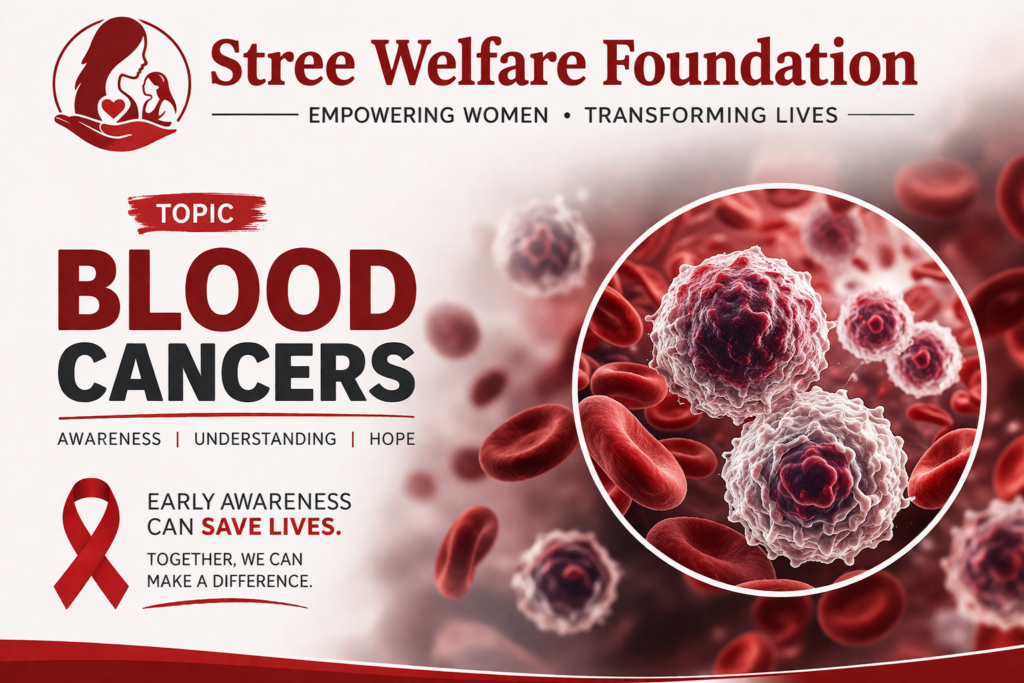
Blood Cancers: Types, Symptoms, Causes, Diagnosis, Treatment & Prevention
Published By – Stree Welfare Foundation
🌐 https://swfindia.org/
1. Introduction – What are Blood Cancers?
Blood cancers are a group of serious diseases that begin in the cells of the bone marrow or the lymphatic system. Unlike solid tumors that form in specific organs (like the breast or lungs), blood cancers affect the body’s ability to produce healthy blood cells. They disrupt the normal process of blood cell growth, replacing healthy cells with abnormal ones that do not function properly.
Blood cancers include leukemias, lymphomas, and myelomas, and they can affect people of all ages children, adults, and the elderly. Early detection and timely treatment are crucial for improving outcomes and saving lives.
At Stree Welfare Foundation, we are committed to spreading awareness about blood cancers, educating communities, and providing support to patients and families affected by these conditions.
2. Understanding the Blood and Bone Marrow
To understand blood cancers, it’s important to know how blood is formed:
Bone Marrow is the soft, spongy tissue inside bones where blood cells are produced.
Blood contains three major types of cells:
Red Blood Cells (RBCs) – carry oxygen
White Blood Cells (WBCs) – fight infection
Platelets – help in clotting and stop bleeding
In a healthy body, bone marrow produces these cells in a balanced way. In blood cancers, this balance is disrupted, leading to uncontrolled growth of abnormal cells.
3. Common Types of Blood Cancers
Blood cancers are usually classified into three main types:
3.1 Leukemia
Leukemia starts in the bone marrow and causes a large number of abnormal white blood cells to enter the bloodstream. It progresses quickly and affects normal blood cell production.
Major types of leukemia include:
Acute Lymphoblastic Leukemia (ALL) – common in children
Acute Myeloid Leukemia (AML) – affects adults more often
Chronic Lymphocytic Leukemia (CLL) – typically older adults
Chronic Myeloid Leukemia (CML)
3.2 Lymphoma
Lymphoma begins in the lymphatic system, which is part of the immune system. It develops when lymphocytes (a type of white blood cell) grow uncontrollably.
Main forms:
Hodgkin Lymphoma
Non‑Hodgkin Lymphoma
3.3 Multiple Myeloma
Multiple Myeloma affects plasma cells – white blood cells that produce antibodies. When plasma cells become cancerous, they multiply rapidly and damage bone and immune function.
4. Blood Cancer Risk Factors
Blood cancers can develop for many reasons. While some factors increase the risk, having risk factors does not guarantee you will develop cancer.
Common risk factors include:
4.1 Genetic and Family History
Certain inherited conditions increase cancer risk.
Family history of blood cancers can raise the likelihood.
4.2 Age
Leukemia and myeloma are more common in adults.
ALL is more common in children.
4.3 Environmental and Lifestyle Factors
Exposure to high levels of radiation
Exposure to benzene and certain chemicals
4.4 Weakened Immune System
HIV/AIDS
Organ transplant patients on immunosuppressants
4.5 Previous Cancer Treatment
Chemotherapy or radiation therapy for another cancer may increase the risk of blood cancer later.
5. Common Signs and Symptoms of Blood Cancers
Symptoms of blood cancers may be subtle at first and can mimic other illnesses. If you notice any persistent or unexplained symptoms, it is important to consult a doctor immediately.
Common Symptoms Include:
Fatigue, weakness, or loss of energy
Frequent or severe infections
Fever or chills without infection
Unexplained weight loss
Swollen lymph nodes (in neck, underarms, groin)
Easy bleeding or bruising
Bone or joint pain
Shortness of breath
Specific Warning Signs:
Night sweats
Frequent nosebleeds
Pale skin (due to anemia)
Persistent cough or chest pain
Remember, these symptoms are not always cancer — but persistent symptoms should be medically evaluated.
6. Diagnosis of Blood Cancers
Accurate and early diagnosis is essential for effective treatment.
Doctors use various tests to confirm blood cancers:
6.1 Complete Blood Count (CBC)
Measures the levels of red blood cells, white blood cells, and platelets.
6.2 Bone Marrow Biopsy
Sample taken from bone marrow to detect abnormal cells.
6.3 Flow Cytometry and Immunophenotyping
Helps identify specific types of abnormal blood cells.
6.4 Genetic and Molecular Testing
Detects specific genetic changes associated with cancer.
6.5 Imaging Tests
CT scans, MRI, and PET scans to check for disease spread.
7. Treatment Options for Blood Cancers
Treatment depends on the type of cancer, stage, patient’s age, and overall health.
7.1 Chemotherapy
Uses drugs to destroy cancer cells.
7.2 Radiation Therapy
Targets specific areas with high‑energy rays.
7.3 Immunotherapy
Stimulates the immune system to fight cancer cells.
7.4 Targeted Therapy
Drugs target specific cancer cell proteins.
7.5 Stem Cell Transplantation
Also known as bone marrow transplant — replaces damaged bone marrow with healthy cells.
7.6 Clinical Trials
Participating in research studies may provide access to new treatments.
8. Blood Cancer Treatment in India – What to Expect
India has advanced cancer treatment centers and skilled oncologists. Treatment usually involves:
Personalized treatment plan
Combination of therapies depending on cancer type
Supportive care (pain control, nutrition, mental health)
At Stree Welfare Foundation, we encourage regular screening and timely medical support to improve outcomes.
9. Preventing Blood Cancers: What You Can Do
While not all blood cancers can be prevented, you can reduce your risk by:
Maintain a Healthy Lifestyle
Balanced diet rich in fruits and vegetables
Regular physical activity
Avoid tobacco and smoking
Reduce Environmental Exposures
Limit contact with chemicals
Follow safety guidelines at work
Stay Informed
Understand family medical history
Seek regular health checkups
Early detection through screening is a powerful prevention tool.
10. Emotional & Social Support for Patients
A cancer diagnosis affects more than the body — it impacts emotions, family life, finances, and quality of life.
At Stree Welfare Foundation, we provide:
➡ Awareness campaigns
to educate communities
➡ Support groups
for patients and families
➡ Free counseling
to manage emotional stress
➡ Guidance on treatment options
helping patients navigate healthcare systems
No one should face cancer alone.
11. Inspirational Survivors & Real Stories
Hearing about others who fought blood cancer can bring hope and encouragement.
“After months of fatigue and tests, I was diagnosed with leukemia. Early detection saved my life. With treatment and support, I am stronger today.” – Survivor Story
These real experiences show that blood cancer is treatable, and many people live happy lives after treatment.
12. FAQs About Blood Cancer
Q1. Is blood cancer hereditary?
A: Not always, but family history can increase risk.
Q2. Can children get blood cancer?
A: Yes, leukemia like ALL is common in children.
Q3. Does treatment always cure blood cancer?
A: Treatment success depends on type, stage, and early detection.
Q4. Are there vaccines to prevent blood cancer?
A: No vaccines for blood cancer yet, but vaccines like HPV help prevent other cancers.
13. Conclusion – Knowledge Saves Lives
Blood cancers are complex diseases that require early detection, appropriate treatment, emotional support, and continuous care. With advances in medicine and awareness, many patients live long, fulfilling lives after diagnosis.
At Stree Welfare Foundation (https://swfindia.org/), we strive to spread health awareness, promote regular screening, and support patients on their cancer journey.
Be aware. Be proactive. Get screened. And live better.
Together, we can build a healthier, cancer‑aware society.
14. Call to Action
👉 Learn more and support our initiatives:
🌐 https://swfindia.org/
👉 Share this article with friends and family to spread awareness.
👉 Visit a doctor if you notice any symptoms listed above.