
Importance of Child Vaccination in India
Importance of Child Vaccination in India | Stree Welfare Foundation: Child vaccination is one of the most important steps in protecting children from serious and life-threatening diseases. In a country like India, where millions of children are born every year, vaccination programs play a vital role in improving public health and reducing child mortality. Vaccines help strengthen a child’s immune system and protect them from diseases such as Polio, Measles, Tuberculosis, and Hepatitis B.
The Government of India runs several immunization programs, including the Universal Immunization Programme, to ensure that every child receives essential vaccines free of cost. These vaccines are given at different stages of a child’s early life to provide long-term protection against infectious diseases.
Vaccination not only protects individual children but also helps prevent the spread of diseases in communities. When most children are vaccinated, it creates herd immunity, which protects those who cannot receive vaccines due to medical conditions.
Organizations like Stree Welfare Foundation work to raise awareness about child health and the importance of timely vaccination. Through education, health camps, and community programs, parents are encouraged to follow the recommended vaccination schedule and ensure a healthier future for their children.v
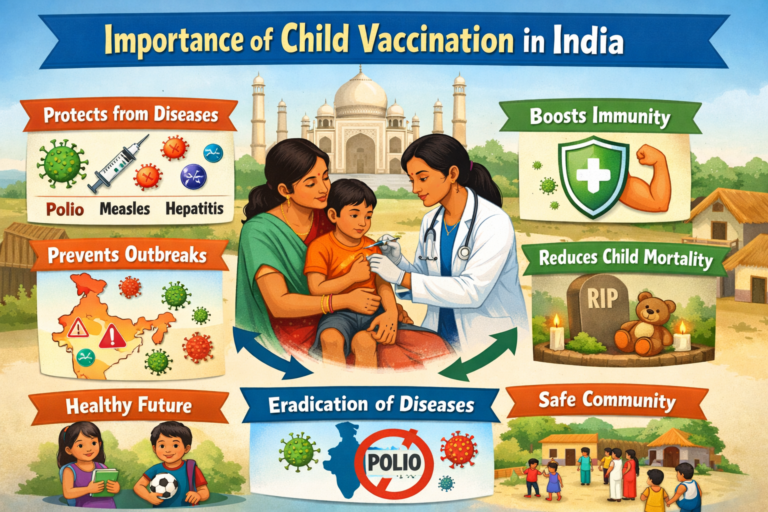
Importance of Child Vaccination in India
Published by – Stree Welfare Foundation
Introduction
Child vaccination plays a vital role in protecting children from serious and life-threatening diseases. In a country like India, where millions of children are born every year, vaccination programs are essential to ensure healthy growth and prevent the spread of infectious diseases.
Vaccines help strengthen a child’s immune system and protect them from diseases such as Polio, Measles, Hepatitis B, and Tuberculosis. Through national immunization programs and awareness campaigns, organizations like Stree Welfare Foundation work to educate parents about the importance of timely vaccination.
In this blog, we will explore why child vaccination is important in India, the benefits of immunization, and how parents can ensure their children receive all recommended vaccines.
What is Child Vaccination?
Child vaccination, also known as immunization, is the process of giving vaccines to children to protect them from infectious diseases. Vaccines contain weakened or inactive parts of a disease-causing organism that help the body develop immunity.
When a child receives a vaccine, their immune system learns how to fight the disease without the child actually getting sick. This protection helps prevent serious illnesses and complications later in life.
Vaccination is one of the most effective and safest ways to protect children’s health and reduce the spread of diseases in communities.
Importance of Child Vaccination in India
1. Protection Against Life-Threatening Diseases
Vaccination protects children from dangerous diseases that can cause severe illness, disability, or even death. Diseases such as Diphtheria, Pertussis, and Tetanus were once very common but are now largely preventable through vaccines.
By vaccinating children at the right time, parents can ensure their children remain protected during the early and most vulnerable years of life.
2. Reducing Child Mortality
Child vaccination programs have significantly reduced child mortality rates in many countries. In India, government initiatives and health organizations continue to promote immunization to ensure every child receives life-saving vaccines.
Vaccines protect children from infectious diseases that could otherwise lead to severe complications, hospitalization, or death.
3. Building Strong Immunity
Vaccines help strengthen a child’s immune system. When vaccinated, the body produces antibodies that protect against harmful viruses and bacteria.
This immune protection helps children stay healthier, attend school regularly, and grow into healthy adults.
4. Preventing Disease Outbreaks
Vaccination not only protects individual children but also protects communities. When a large number of children are vaccinated, it reduces the spread of diseases in the population.
This concept is known as herd immunity, which helps protect people who cannot receive vaccines due to medical conditions.
5. Supporting National Health Programs
The Government of India has introduced several immunization programs to promote child vaccination across the country. One of the most important programs is the Universal Immunization Programme, which provides free vaccines to children and pregnant women.
These programs aim to protect children from preventable diseases and improve public health across India.
Common Vaccines for Children in India
Children in India receive several vaccines during their early years. Some important vaccines include:
BCG vaccine for protection against Tuberculosis
OPV vaccine to prevent Polio
Measles vaccine to prevent Measles
Hepatitis B vaccine to prevent Hepatitis B
DPT vaccine for Diphtheria, Pertussis, and Tetanus
These vaccines are usually given during the first few years of a child’s life according to the national vaccination schedule.
Challenges in Child Vaccination in India
Although vaccination programs are widely available, several challenges still exist in India:
Lack of Awareness
Many parents in rural areas are not fully aware of the importance of vaccines or the vaccination schedule.
Limited Healthcare Access
Some remote villages have limited healthcare facilities, making it difficult for families to access vaccination services.
Misconceptions About Vaccines
There are still myths and misconceptions about vaccines that sometimes prevent parents from vaccinating their children.
Raising awareness and providing accurate information is essential to overcome these challenges.
Role of Social Organizations in Promoting Vaccination
Non-government organizations play an important role in spreading awareness about child vaccination.
Organizations like Stree Welfare Foundation organize health awareness programs, community workshops, and health camps to educate families about the importance of immunization.
These initiatives help ensure that more children receive timely vaccines and remain protected from preventable diseases.
Tips for Parents to Ensure Timely Vaccination
Parents can take several steps to protect their children through vaccination:
Follow the national vaccination schedule.
Visit nearby health centers for regular immunization.
Keep vaccination records safe.
Consult healthcare professionals if there are questions about vaccines.
Participate in community vaccination drives.
By taking these steps, parents can ensure their children grow up healthy and protected from dangerous diseases.
Conclusion
Child vaccination is one of the most effective ways to protect children from life-threatening diseases and improve public health in India. Vaccines save millions of lives every year and help children lead healthier lives.
Through awareness programs, healthcare initiatives, and government support, India continues to expand its immunization coverage to reach every child.
Organizations like Stree Welfare Foundation play an important role in promoting vaccination awareness and encouraging families to prioritize children’s health.
Ensuring that every child receives timely vaccines is a shared responsibility of parents, healthcare professionals, communities, and social organizations. By supporting vaccination programs, we can build a healthier future for the next generation.
Pingback: Healthy Lifestyle Tips for Families in India | Rural Health