
Top 10 Early Symptoms of Cancer Everyone Should Know | Stree Welfare Foundation
Early Symptoms of Cancer – Important Warning Signs Everyone Should Know
Understanding the early symptoms of cancer is extremely important for protecting your health and improving the chances of successful treatment. Cancer is a serious disease that develops when abnormal cells grow uncontrollably in the body.
In many cases, cancer grows slowly and may not show noticeable symptoms in the beginning. However, the body often gives certain warning signs before the disease becomes advanced. Recognizing these early signs can help individuals seek medical help at the right time and increase the chances of recovery.
Some of the most common early signs of cancer include unexplained weight loss, constant fatigue, unusual lumps or swelling in the body, persistent cough, and noticeable changes in the skin such as dark spots or moles that change in size or color. In addition, people may experience digestive problems, difficulty swallowing food, or changes in bowel and bladder habits. Unexplained bleeding or sores that do not heal for a long time can also be important warning signs.
It is important to remember that these symptoms do not always mean cancer. Many of them can also be caused by other health conditions. However, if these symptoms persist for several weeks or become more severe, it is always advisable to consult a doctor for proper medical evaluation.
Early detection plays a crucial role in successful cancer treatment. When cancer is diagnosed in its early stages, doctors have more treatment options available and the chances of survival increase significantly. Regular health checkups, cancer screening tests, and being aware of body changes are essential steps in detecting cancer early.
Maintaining a healthy lifestyle can also help reduce the risk of cancer. Eating a balanced diet rich in fruits and vegetables, exercising regularly, avoiding tobacco products, limiting alcohol consumption, and managing stress are important habits that support overall health and well-being.
At Stree Welfare Foundation, we believe that spreading awareness about cancer symptoms and prevention can help save lives. Educating communities about the early warning signs of cancer encourages people to take timely action and prioritize their health.
If you notice any unusual changes in your body that continue for a long period, do not ignore them. Seek medical advice and get proper health checkups. Early awareness and early detection can make a life-saving difference.
For more health awareness articles and information about cancer prevention, visit:
🌐 https://swfindia.org/ – Stree Welfare Foundation
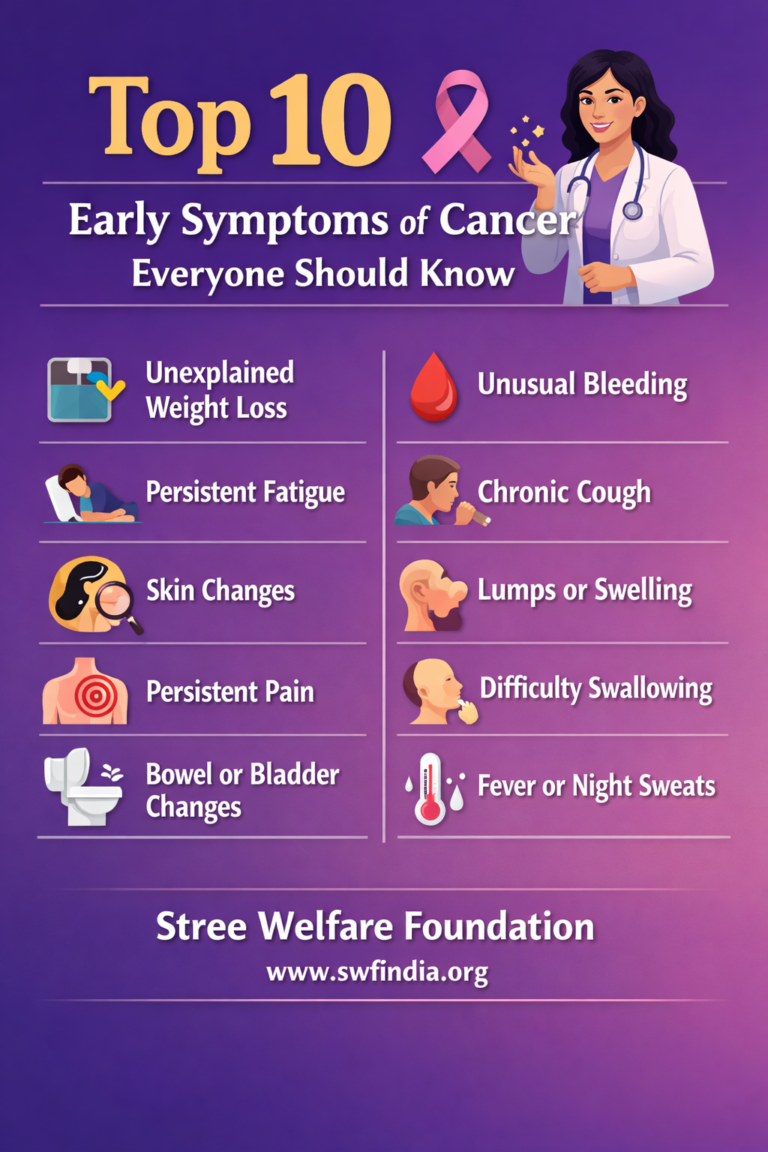
Top 10 Early Symptoms of Cancer Everyone Should Know
Top 10 Early Symptoms of Cancer Everyone Should Know
Top 10 Early Symptoms of Cancer Everyone Should Know | Stree Welfare Foundation
Learn the top 10 early symptoms of cancer everyone should know. Early detection can save lives. Read this awareness guide by Stree Welfare Foundation.
Introduction
Cancer is one of the most serious health conditions affecting millions of people worldwide. It occurs when abnormal cells grow uncontrollably in the body and can spread to different organs. While cancer can be life-threatening, the good news is that early detection greatly increases the chances of successful treatment and survival.
Many people ignore small changes in their body because they believe the symptoms are minor or temporary. However, our body often gives warning signals when something is wrong. Recognizing these signals early can help individuals seek medical help before the disease progresses.
In this awareness guide by Stree Welfare Foundation (https://swfindia.org/), we will discuss the Top 10 Early Symptoms of Cancer Everyone Should Know so that individuals can stay alert and take action when necessary.
Why Early Detection of Cancer is Important
Early detection plays a crucial role in cancer treatment. When cancer is diagnosed at an early stage, doctors have more treatment options available and the chances of recovery become much higher.
Regular health checkups, awareness of body changes, and timely consultation with healthcare professionals can significantly reduce the risk of advanced cancer. Being informed about early symptoms is the first step toward protecting your health.
Top 10 Early Symptoms of Cancer Everyone Should Know
1. Unexplained Weight Loss
One of the most common early signs of cancer is sudden and unexplained weight loss. If you lose a significant amount of weight without trying, it may be a warning sign of an underlying health issue.
Many cancers such as stomach cancer, pancreatic cancer, lung cancer, and esophageal cancer can cause unexpected weight loss. If you notice rapid weight changes without dieting or exercise, it is important to consult a doctor.
2. Constant Fatigue and Weakness
Feeling tired after a long day is normal, but persistent fatigue that does not improve with rest can sometimes indicate cancer. Cancer-related fatigue often feels overwhelming and can affect daily activities.
This symptom is commonly associated with cancers like leukemia, colon cancer, and stomach cancer. If you feel unusually weak or exhausted for several weeks, medical advice should be sought.
3. Changes in Skin Appearance
Your skin can reflect important changes happening inside the body. Some cancers may cause visible changes in the skin.
Warning signs may include:
Yellowing or darkening of the skin
Redness or irritation that does not heal
Unusual moles or spots that change in size or color
Sores that take a long time to heal
Such symptoms may indicate skin cancer or other health problems and should be evaluated by a healthcare professional.
4. Persistent Pain
Long-lasting pain without a clear reason should never be ignored. While pain can occur due to many common conditions, persistent pain may sometimes be linked to cancer.
Examples include:
Frequent headaches that do not go away
Back pain that continues for weeks
Abdominal pain without a clear cause
These symptoms may be related to cancers such as brain cancer, ovarian cancer, or pancreatic cancer. Medical evaluation is important if the pain continues for a long period.
5. Changes in Bowel or Bladder Habits
Changes in digestion or urination patterns can sometimes be an early sign of cancer affecting the digestive or urinary system.
Possible symptoms include:
Blood in stool or urine
Persistent constipation or diarrhea
Pain while urinating
Increased frequency of urination
These signs may be associated with colon cancer, bladder cancer, or prostate cancer.
6. Unusual Bleeding or Discharge
Unexpected bleeding from any part of the body can be a warning sign that should not be ignored.
Examples include:
Coughing up blood
Vaginal bleeding between menstrual cycles
Blood in stool or urine
Such symptoms may indicate cancers like lung cancer, cervical cancer, or colon cancer. Immediate medical consultation is recommended if you experience unexplained bleeding.
7. Persistent Cough or Hoarseness
A cough that lasts for several weeks or a hoarse voice that does not improve could indicate lung or throat-related cancers.
People should pay attention to symptoms such as:
A cough that does not go away
Chest pain during coughing
Voice changes or hoarseness
Individuals who smoke or are exposed to pollution should be especially cautious and seek medical evaluation if these symptoms persist.
8. Lumps or Swelling in the Body
The appearance of a lump or swelling anywhere in the body may sometimes be an early sign of cancer.
Common areas where lumps may appear include:
Breast
Neck
Underarms
Testicles
While not all lumps are cancerous, any unusual growth or swelling should be checked by a doctor as soon as possible.
9. Difficulty Swallowing or Persistent Indigestion
Frequent indigestion or difficulty swallowing food may indicate cancers of the digestive system.
Symptoms to watch for include:
Pain when swallowing food
Feeling like food is stuck in the throat
Frequent heartburn or nausea
These symptoms may be related to cancers of the esophagus, stomach, or throat.
10. Unexplained Fever or Night Sweats
Recurring fever without infection or excessive sweating at night may be associated with certain cancers that affect the immune system.
These symptoms are sometimes seen in:
Leukemia
Lymphoma
If fever continues for weeks without a clear cause, it is important to seek medical advice.
Tips to Reduce the Risk of Cancer
While not all cancers can be prevented, adopting healthy habits can significantly reduce the risk.
Here are some important prevention tips:
Eat a healthy diet rich in fruits and vegetables
Exercise regularly to maintain a healthy weight
Avoid smoking and tobacco products
Limit alcohol consumption
Protect your skin from harmful sun exposure
Go for regular health screenings and checkups
A healthy lifestyle plays a major role in preventing many types of cancer.
Conclusion
Cancer awareness is extremely important for protecting public health. Many cancers show early warning signs, but people often ignore them until the disease becomes serious.
The Top 10 early symptoms of cancer discussed in this article — unexplained weight loss, constant fatigue, skin changes, persistent pain, changes in bowel habits, unusual bleeding, long-lasting cough, lumps, swallowing difficulty, and unexplained fever — should never be ignored.
If you notice any of these symptoms, consult a healthcare professional immediately. Early detection and timely treatment can save lives.
Spreading awareness about cancer symptoms can help communities stay informed and encourage people to prioritize their health.
Published by:
Stree Welfare Foundation
🌐 https://swfindia.org/
Pingback: Healthy Lifestyle Tips for Families in India | Rural Health