
Early Symptoms of Breast Cancer Every Woman Should Know
Early Symptoms of Breast Cancer Every Woman Should Know
Published By – Stree Welfare Foundation
🌐 https://swfindia.org/
Breast cancer is one of the most common health problems affecting women worldwide. However, early detection of breast cancer can greatly increase the chances of successful treatment. That is why it is very important for every woman to understand the early symptoms of breast cancer and take timely action.
One of the most common signs is a lump in the breast or underarm area. This lump may feel hard or different from the surrounding tissue. Women should also watch for changes in breast size, shape, or skin texture, such as redness, swelling, or dimpling that looks like orange peel.
Another early symptom can be changes in the nipple, including nipple inversion, pain, or unusual discharge. Some women may also experience persistent breast pain or tenderness that does not go away.
Regular breast self-examination and medical screening like mammograms are important steps in detecting breast cancer at an early stage. Maintaining a healthy lifestyle, regular exercise, and routine health checkups can also help reduce the risk.
If you notice any unusual changes in your breasts, consult a healthcare professional immediately. Early awareness and timely diagnosis can help save lives.
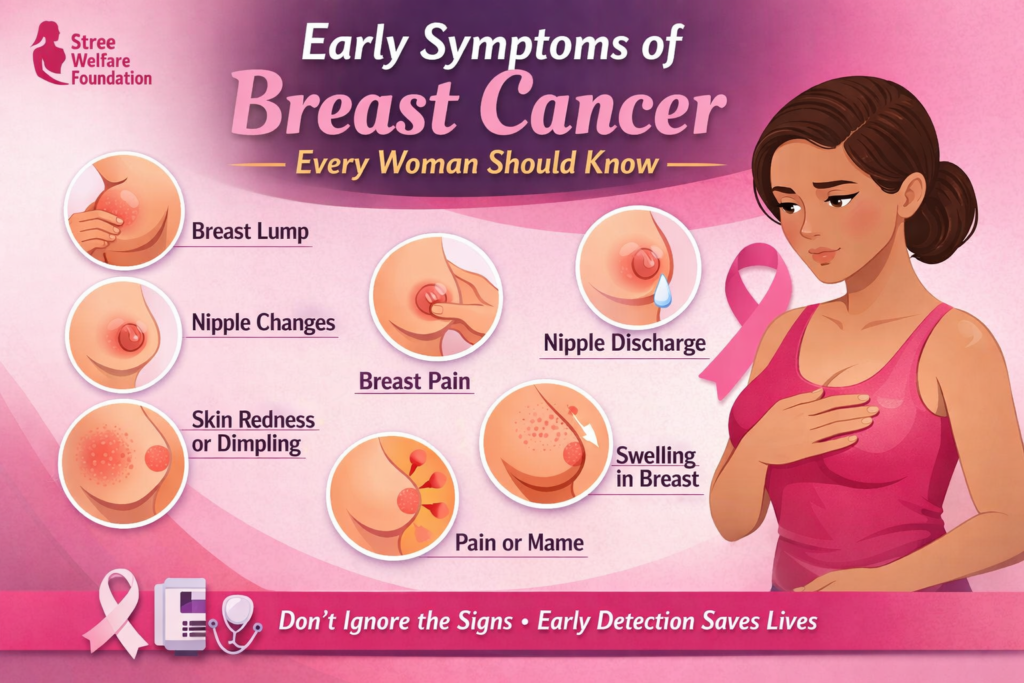
Early Symptoms of Breast Cancer Every Woman Should Know
Breast cancer is one of the most common cancers affecting women worldwide. According to global health reports, millions of women are diagnosed with breast cancer every year. However, the most important fact is that breast cancer can often be treated successfully if it is detected early.
Understanding the early symptoms of breast cancer can save lives. Many women ignore small changes in their breasts, thinking they are normal. But recognizing warning signs early and consulting a doctor can make a huge difference in treatment and recovery.
In this article, we will explain the early symptoms of breast cancer every woman should know, risk factors, prevention tips, and when to see a doctor.
What is Breast Cancer?
Breast cancer occurs when cells in the breast begin to grow abnormally and uncontrollably. These cells form a tumor that can often be felt as a lump or seen on medical imaging such as a mammogram.
Breast cancer can start in different parts of the breast, including:
Milk ducts (ductal cancer)
Milk-producing glands (lobular cancer)
Other breast tissues
Although it mostly affects women, men can also develop breast cancer, though it is much rarer.
Why Early Detection of Breast Cancer is Important
Early detection significantly increases survival rates. When breast cancer is diagnosed in its early stage, treatment options are more effective and less aggressive.
Benefits of early detection include:
✔ Higher chances of successful treatment
✔ Less complicated medical procedures
✔ Lower treatment costs
✔ Better quality of life for patients
This is why knowing the early symptoms is extremely important for every woman.
Early Symptoms of Breast Cancer Every Woman Should Know
Below are some of the most common early warning signs of breast cancer.
1. A Lump in the Breast or Underarm
One of the most common symptoms is a new lump in the breast or underarm area.
The lump may feel:
Hard
Painless
Irregular in shape
Different from surrounding tissue
However, not every lump is cancerous. Some may be benign (non-cancerous). Still, any new lump should be checked by a doctor immediately.
2. Change in Breast Size or Shape
If you notice sudden changes in the size or shape of one breast, it could be a warning sign.
Possible changes include:
One breast becoming larger or swollen
A visible difference between the two breasts
Distortion in breast shape
These changes may happen gradually, so it is important to pay attention to how your breasts normally look.
3. Skin Changes on the Breast
Breast cancer can sometimes cause changes in the skin of the breast.
Look for symptoms such as:
Redness
Thickened skin
Dimpling (skin looking like orange peel)
Scaling or irritation
These skin changes may indicate inflammatory breast cancer or other serious conditions.
4. Nipple Changes
Changes in the nipple can also be an early sign of breast cancer.
Watch for:
Nipple turning inward (inversion)
Pain in the nipple area
Dry or flaky skin around the nipple
Changes in nipple appearance
Any unusual change in the nipple should not be ignored.
5. Unusual Nipple Discharge
Fluid leaking from the nipple without squeezing can be a warning sign.
Types of discharge that may need medical attention include:
Bloody discharge
Clear fluid
Yellow or green discharge
Discharge from only one breast
Although discharge can occur due to infections or hormonal changes, it should always be checked by a doctor.
6. Persistent Breast Pain
Breast pain is common during hormonal changes, menstrual cycles, or pregnancy. However, persistent pain in one specific area of the breast could indicate a problem.
Breast cancer pain may feel like:
Burning sensation
Sharp pain
Constant discomfort
If pain does not go away after a few weeks, consult a healthcare professional.
7. Swelling in Part of the Breast
Sometimes breast cancer may cause swelling in a specific part of the breast, even if no lump is visible.
This swelling may cause:
Tightness in the breast
Visible swelling
Skin redness
Medical evaluation is important to rule out serious issues.
Risk Factors for Breast Cancer
Some women are more likely to develop breast cancer due to certain risk factors.
Common risk factors include:
✔ Age above 40
✔ Family history of breast cancer
✔ Genetic mutations (BRCA1 or BRCA2)
✔ Early menstruation (before age 12)
✔ Late menopause (after age 55)
✔ Obesity or unhealthy lifestyle
✔ Smoking and alcohol consumption
✔ Lack of physical activity
However, many women with breast cancer have no family history, so regular screening is still important.
How to Check Your Breasts at Home (Breast Self-Examination)
Regular breast self-examination (BSE) can help detect early changes.
Steps for Breast Self-Exam
Stand in front of a mirror and look for changes in shape or skin.
Raise your arms and check again.
Use your fingers to gently press around the breast in circular motions.
Check the underarm area for lumps.
Gently squeeze the nipple to check for discharge.
Experts recommend performing this examination once every month.
Medical Screening for Breast Cancer
In addition to self-exams, professional screening is very important.
Common screening methods:
1. Mammogram
A mammogram is an X-ray of the breast used to detect early tumors.
2. Breast Ultrasound
Helps doctors examine suspicious lumps.
3. MRI Scan
Used in high-risk patients for detailed imaging.
Doctors usually recommend regular mammograms for women over 40.
When Should You See a Doctor?
You should consult a doctor immediately if you notice:
A new breast lump
Unusual nipple discharge
Skin dimpling or redness
Persistent breast pain
Change in breast size or shape
Early medical consultation can prevent serious complications.
Tips to Reduce the Risk of Breast Cancer
Although breast cancer cannot always be prevented, a healthy lifestyle may lower the risk.
Healthy habits include:
✔ Maintaining a healthy weight
✔ Regular physical exercise
✔ Eating a balanced diet rich in fruits and vegetables
✔ Limiting alcohol consumption
✔ Avoiding smoking
✔ Regular health checkups and screenings
These habits not only reduce cancer risk but also improve overall health.
Role of Awareness and Women’s Health Education
One of the biggest problems in many countries is lack of awareness about breast cancer symptoms.
Organizations like Stree Welfare Foundation play an important role by:
Educating women about early symptoms
Promoting cancer screening programs
Supporting women’s health initiatives
Spreading awareness through campaigns and workshops
When women are informed, they are more likely to seek help early and improve survival rates.
Final Thoughts
Breast cancer is a serious disease, but early detection can save lives. Knowing the early symptoms of breast cancer allows women to take action before the disease becomes advanced.
Every woman should pay attention to changes in her body and never ignore unusual symptoms.
Remember:
✔ Regular self-examination
✔ Routine medical screening
✔ Healthy lifestyle
✔ Awareness and education
These steps can help protect women’s health and reduce the impact of breast cancer.
If you notice any unusual signs, consult a healthcare professional immediately.
Published By:
Stree Welfare Foundation
🌐 https://swfindia.org/