
Follicular Lymphoma
Follicular Lymphoma: Symptoms, Causes & Treatment
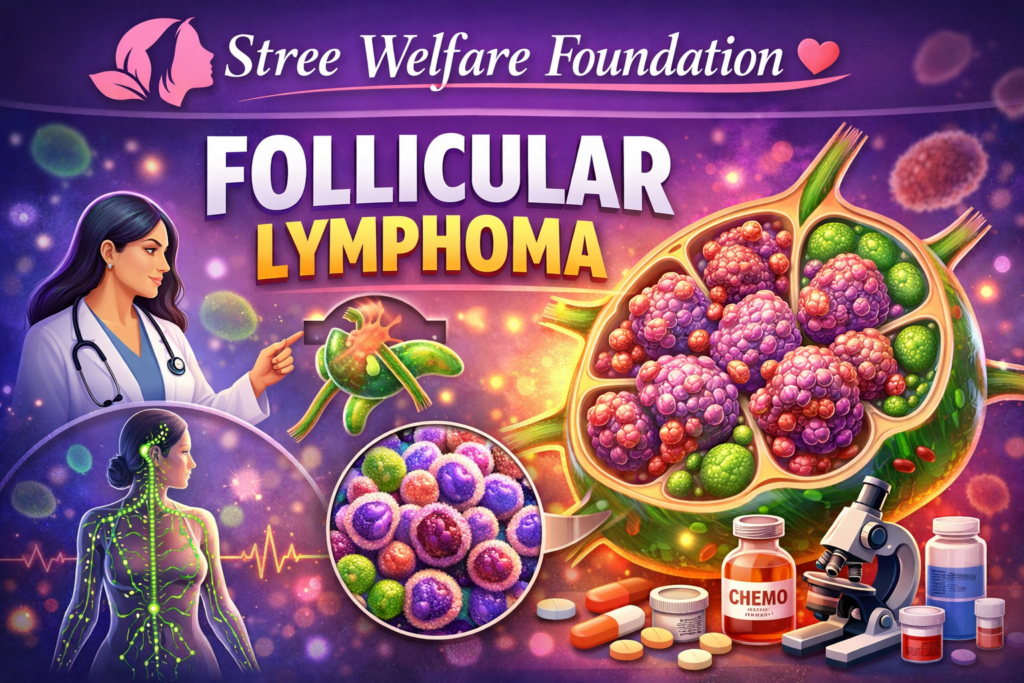
Follicular Lymphoma is a type of non-Hodgkin lymphoma, a cancer that affects the lymphatic system. It develops in B-lymphocytes (white blood cells) and is usually slow-growing, which means symptoms may not appear in the early stages. However, early awareness and diagnosis are important for effective management.
Common symptoms of Follicular Lymphoma include painless swelling of lymph nodes (neck, armpits, or groin), fatigue, unexplained weight loss, night sweats, and fever. If these symptoms persist, it is important to consult a doctor promptly.
The exact cause of this cancer is not fully known, but factors like genetic mutations, weak immune system, and exposure to harmful chemicals may increase the risk. Diagnosis is usually done through biopsy, blood tests, and imaging scans.
Treatment depends on the stage of the disease and may include watchful waiting, chemotherapy, radiation therapy, or targeted therapy. In many cases, Follicular Lymphoma can be managed effectively, allowing patients to live long lives.
Stree Welfare Foundation is committed to spreading awareness about cancer and encouraging early detection. For more information,
Published By visit: https://swfindia.org/ 🌐
Follicular Lymphoma: Symptoms, Causes, Stages, Diagnosis, Treatment & Prevention
Introduction
Follicular Lymphoma is a type of non-Hodgkin lymphoma, a cancer that affects the lymphatic system. It is generally considered a slow-growing (indolent) cancer, but it can still have a serious impact on a person’s health if not diagnosed and managed properly.
With increasing awareness and advancements in medical science, early detection and proper treatment can significantly improve the quality of life of patients. Organizations like Stree Welfare Foundation are actively working to spread awareness about cancer and encourage timely diagnosis and treatment.
👉 For more health awareness initiatives, visit: https://swfindia.org/
What is Follicular Lymphoma?
Follicular Lymphoma is a cancer that originates in B-lymphocytes (a type of white blood cell). These cells are part of the immune system and help the body fight infections.
In this condition, abnormal B-cells accumulate in the lymph nodes, forming tumors. The term “follicular” refers to the pattern in which these cancer cells grow, resembling normal lymph node structures called follicles.
This cancer is usually slow-growing, which means it may not show symptoms in the early stages. However, over time, it can spread to other parts of the body, including the bone marrow, spleen, and blood.
Types of Follicular Lymphoma
Follicular Lymphoma is classified based on the grade (how abnormal the cells look under a microscope):
1. Grade 1 (Low Grade)
Slow-growing
Often does not require immediate treatment
2. Grade 2
Intermediate behavior
May require monitoring or treatment
3. Grade 3 (High Grade)
More aggressive
Requires active treatment
Causes of Follicular Lymphoma
The exact cause of Follicular Lymphoma is not fully understood. However, certain genetic and environmental factors may contribute to its development.
Common Causes and Triggers:
Genetic mutations in B-cells
Chromosomal abnormality (especially translocation involving chromosomes 14 and 18)
Exposure to harmful chemicals
Weak immune system
Risk Factors
Some factors may increase the risk of developing Follicular Lymphoma:
Age (more common in people over 50)
Family history of lymphoma
Exposure to pesticides or toxic chemicals
Autoimmune diseases
HIV or other immune system disorders
Understanding these risk factors can help in early detection and prevention.
Symptoms of Follicular Lymphoma
Follicular Lymphoma often develops slowly, and many patients may not notice symptoms initially.
Common Symptoms Include:
Painless swelling of lymph nodes (neck, armpits, groin)
Fatigue and weakness
Unexplained weight loss
Night sweats
Fever without infection
Loss of appetite
If these symptoms persist, it is important to consult a healthcare professional.
Stages of Follicular Lymphoma
Doctors use staging to determine how far the cancer has spread:
Stage I
Cancer is present in one lymph node region.
Stage II
Cancer is in two or more lymph node regions on the same side of the diaphragm.
Stage III
Cancer is found on both sides of the diaphragm.
Stage IV
Cancer has spread to organs like bone marrow, liver, or lungs.
Diagnosis of Follicular Lymphoma
Early diagnosis plays a crucial role in effective treatment.
Common Diagnostic Tests:
1. Physical Examination
Doctor checks for swollen lymph nodes.
2. Blood Tests
To evaluate overall health and detect abnormalities.
3. Biopsy
A sample of lymph node tissue is examined to confirm cancer.
4. Imaging Tests
CT Scan
PET Scan
MRI
5. Bone Marrow Test
To check if cancer has spread.
Treatment Options
Treatment depends on the stage, symptoms, and overall health of the patient.
1. Watchful Waiting (Active Surveillance)
For early-stage or slow-growing cases, doctors may monitor the condition without immediate treatment.
2. Chemotherapy
Uses drugs to kill cancer cells.
3. Radiation Therapy
High-energy rays target and destroy cancer cells.
4. Immunotherapy
Boosts the immune system to fight cancer.
5. Targeted Therapy
Focuses on specific cancer cell proteins.
6. Stem Cell Transplant
Used in advanced or recurrent cases.
Can Follicular Lymphoma Be Cured?
Follicular Lymphoma is generally considered a chronic condition rather than a completely curable disease. However:
Many patients live long and healthy lives
Treatment can control the disease effectively
Remission (no signs of cancer) is possible
Early detection and continuous monitoring are key.
Prevention Tips
While there is no guaranteed way to prevent Follicular Lymphoma, some healthy lifestyle choices can reduce risk:
Maintain a strong immune system
Avoid exposure to harmful chemicals
Eat a balanced and nutritious diet
Exercise regularly
Avoid smoking and alcohol
Get regular health checkups
Importance of Awareness
In India, many people are not aware of lymphomas and their symptoms. This leads to late diagnosis and complications.
Stree Welfare Foundation plays a vital role in spreading awareness about cancer, especially among women and rural communities. Through awareness campaigns, health camps, and education programs, the foundation helps people understand the importance of early diagnosis and treatment.
Living with Follicular Lymphoma
Living with cancer can be challenging, but with proper support and care, patients can maintain a good quality of life.
Tips for Patients:
Follow your doctor’s advice strictly
Maintain a healthy lifestyle
Seek emotional and psychological support
Stay informed about your condition
Join support groups
Conclusion
Follicular Lymphoma is a slow-growing but serious form of cancer that affects the lymphatic system. While it may not always be curable, it is highly manageable with proper treatment and medical care.
Early detection, awareness, and regular health checkups play a crucial role in controlling the disease. By spreading knowledge and encouraging timely medical consultation, we can save lives and improve outcomes.
Stree Welfare Foundation is committed to empowering individuals with accurate health information and promoting cancer awareness across society.
👉 Visit: https://swfindia.org/ for more awareness programs and support initiatives.
Updated By – Stree Welfare Foundation
This article is regularly updated by Stree Welfare Foundation to provide accurate, reliable, and up-to-date information about cancer awareness, prevention, and treatment.
Our mission is to create a healthier society where every individual is informed, aware, and empowered to take care of their health.